Odami, Yongsan: sake and a courtyard after dinner
Korean original on Naver blog ↗Korean version, 한국어로 읽기 ↗
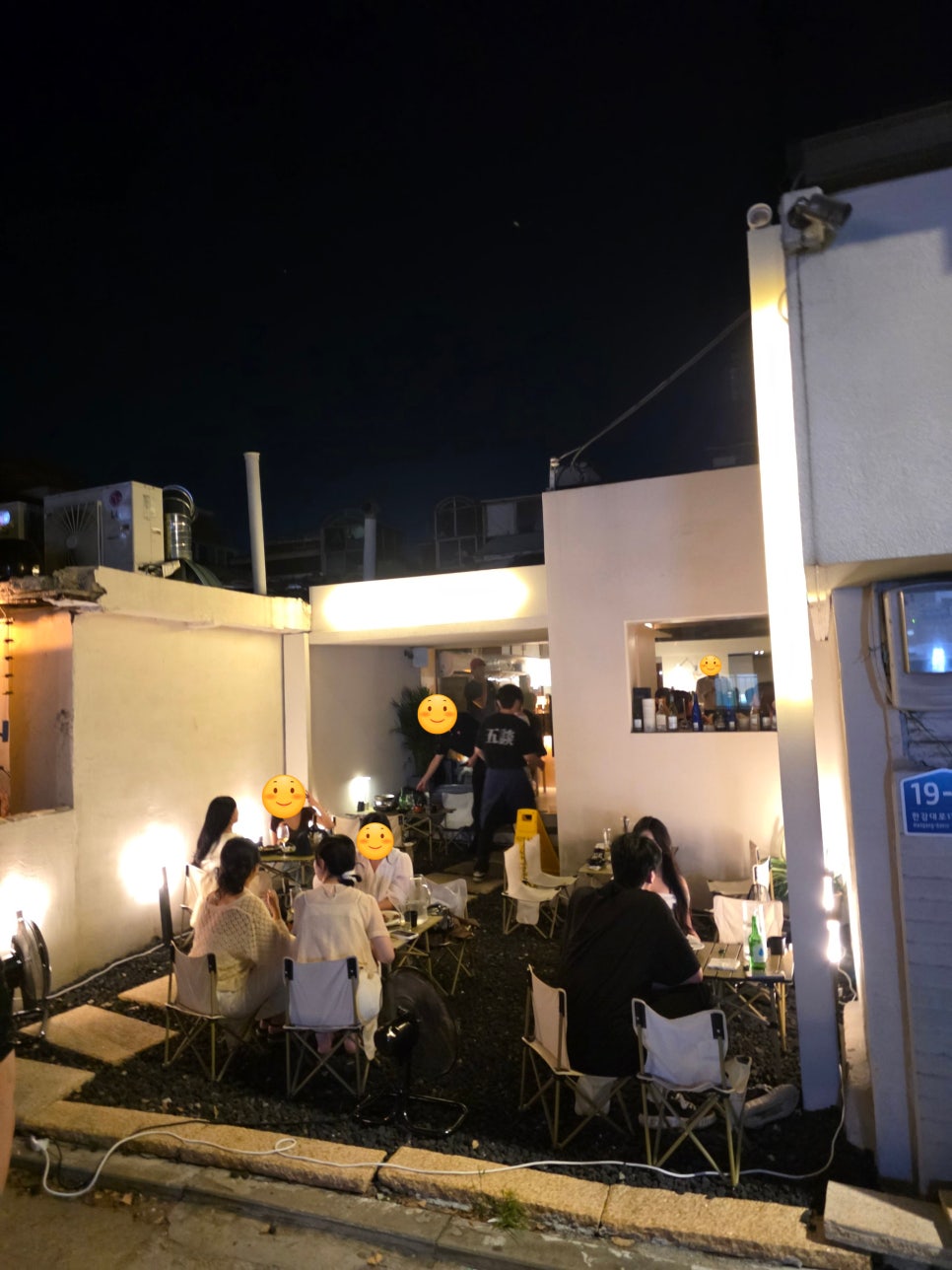
After dinner at Tteutgogi, the pork rib place near Sinyongsan station I wrote about a little while ago, the four of us wanted somewhere nearby for drinks. In Korea this is called round two, 2차, and where you go for it is half the evening. This is where we went.
A friend who works in Yongsan had said the alley people call Ttaengttaeng-geori, the lane by the Baekbin railway crossing, had picked up a lot of good bars lately. We searched for something close, and this came up. Then we walked past it. In a small yard in front of a white building, people were sitting on folding camp chairs with sake on low tables, and that was enough. We went in without a booking.
Before you go
| Item | Notes |
|---|---|
| Booking | We walked in on a late-August weekday evening around 9pm. The yard was full when we arrived |
| Ordering rule | A main dish is required, in proportion to the group. For our four that meant one main plus one side. It is printed at the top of the menu |
| Photo review | When we visited, posting an Instagram or Naver review and showing it got you a truffle potato salad or a cucumber dish |
| Getting there | A short walk from Yongsan or Sinyongsan station, inside the alley off Hangang-daero. Public transport makes sense since you will be drinking. If you drive, use one of the paid lots nearby, such as the I’Park Mall garage at Yongsan station; I could not confirm parking or valet at the restaurant |
| Korean name | 오담 (五談) |
The yard is the point
The yard is what the place is about. Folding camp chairs and low tables are set out in front of the shop, and with the warm light coming off the white facade the whole alley glows a little. Late August, night air, a glass on the table. It looked exactly like the evening we wanted.
We went inside first. There were no seats available inside, so we ended up sitting outside after all.
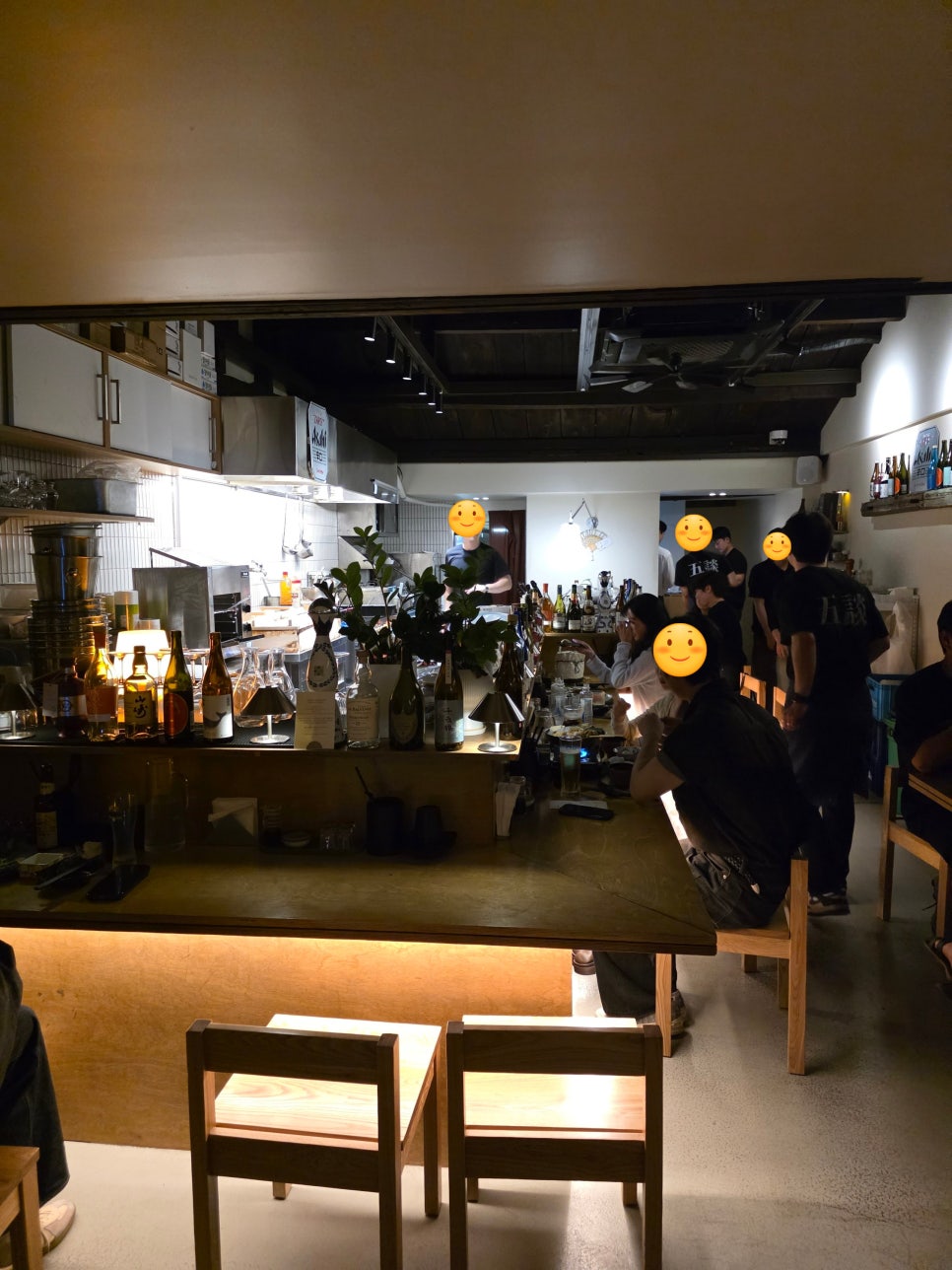
Inside is a counter of dark wood with wooden stools, an open kitchen behind it where two cooks work in full view, and a few tables along the outside for groups of three or four. The light is warm, and the people at the counter seemed to be enjoying their sake.
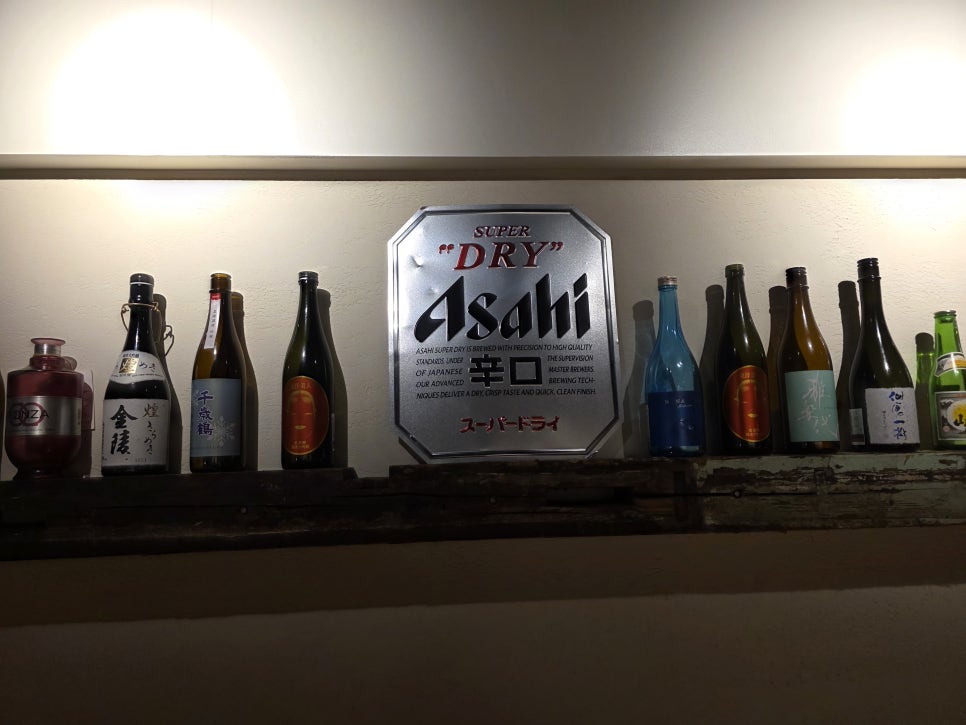
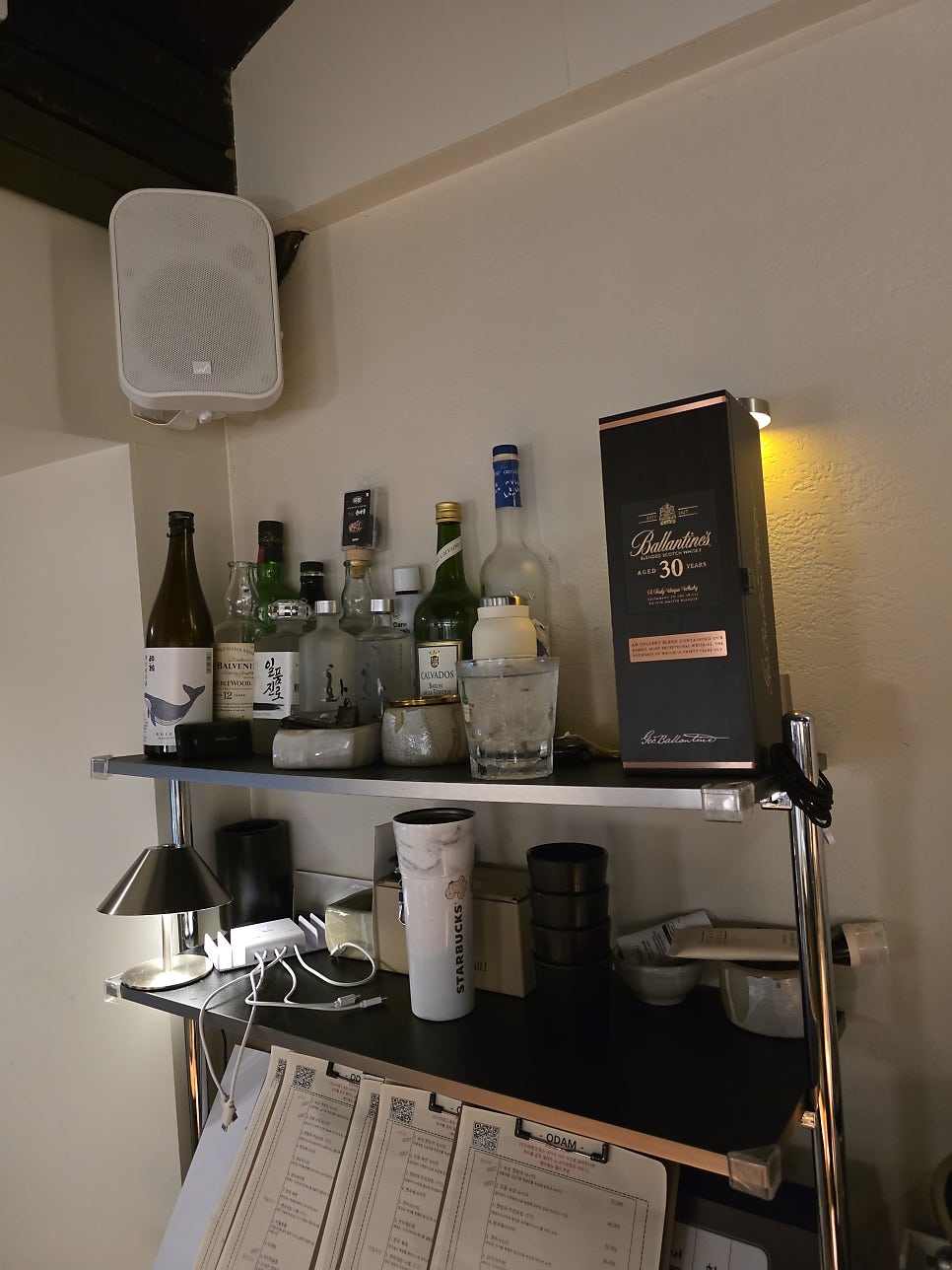
One wall is a wooden shelf full of sake, wine and beer bottles, green, clear, blue and brown. There is an open fridge too, so you can scan what they have before you order. The lineup was wider than I expected for an izakaya this size.
The rule we missed
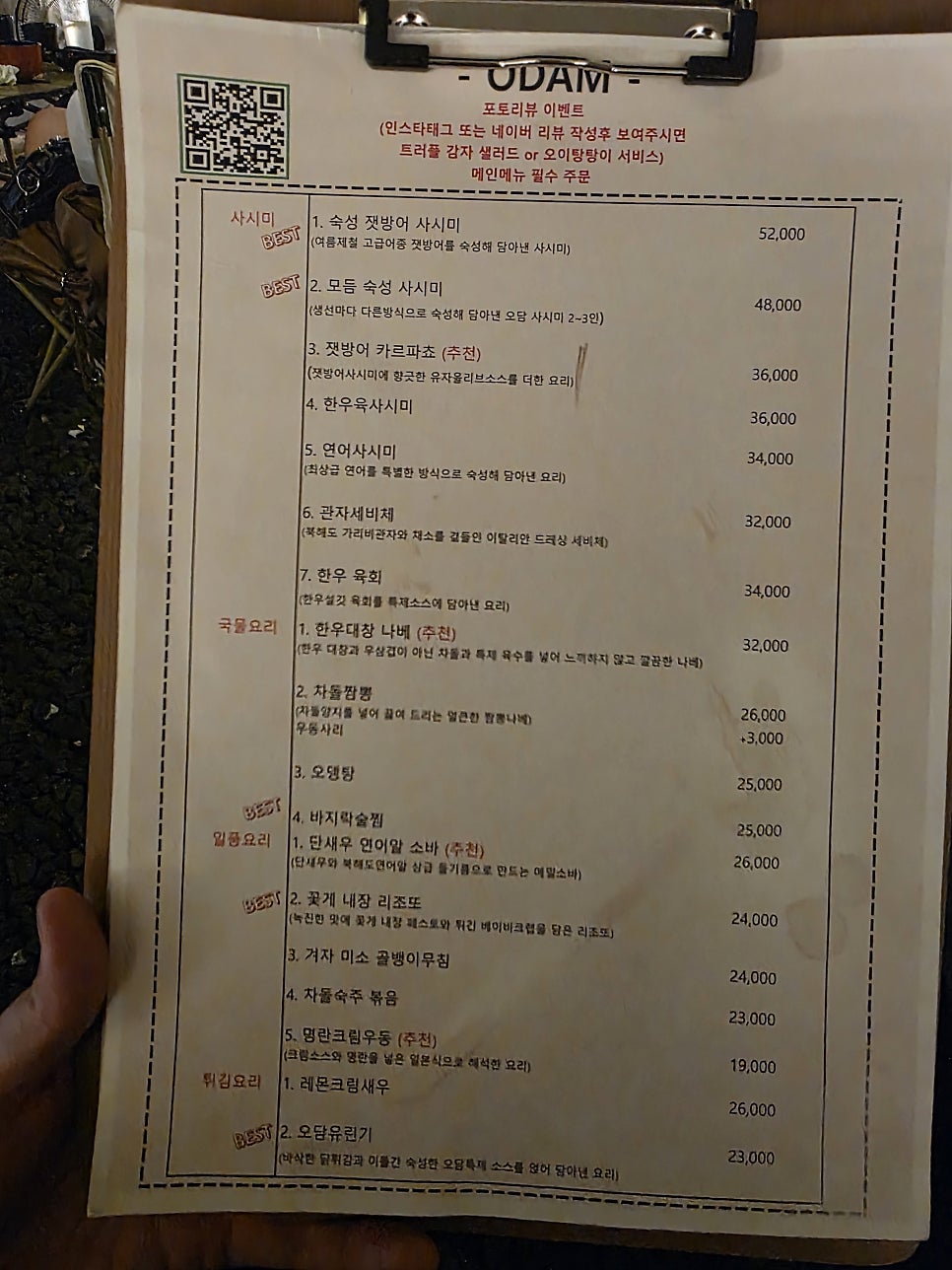
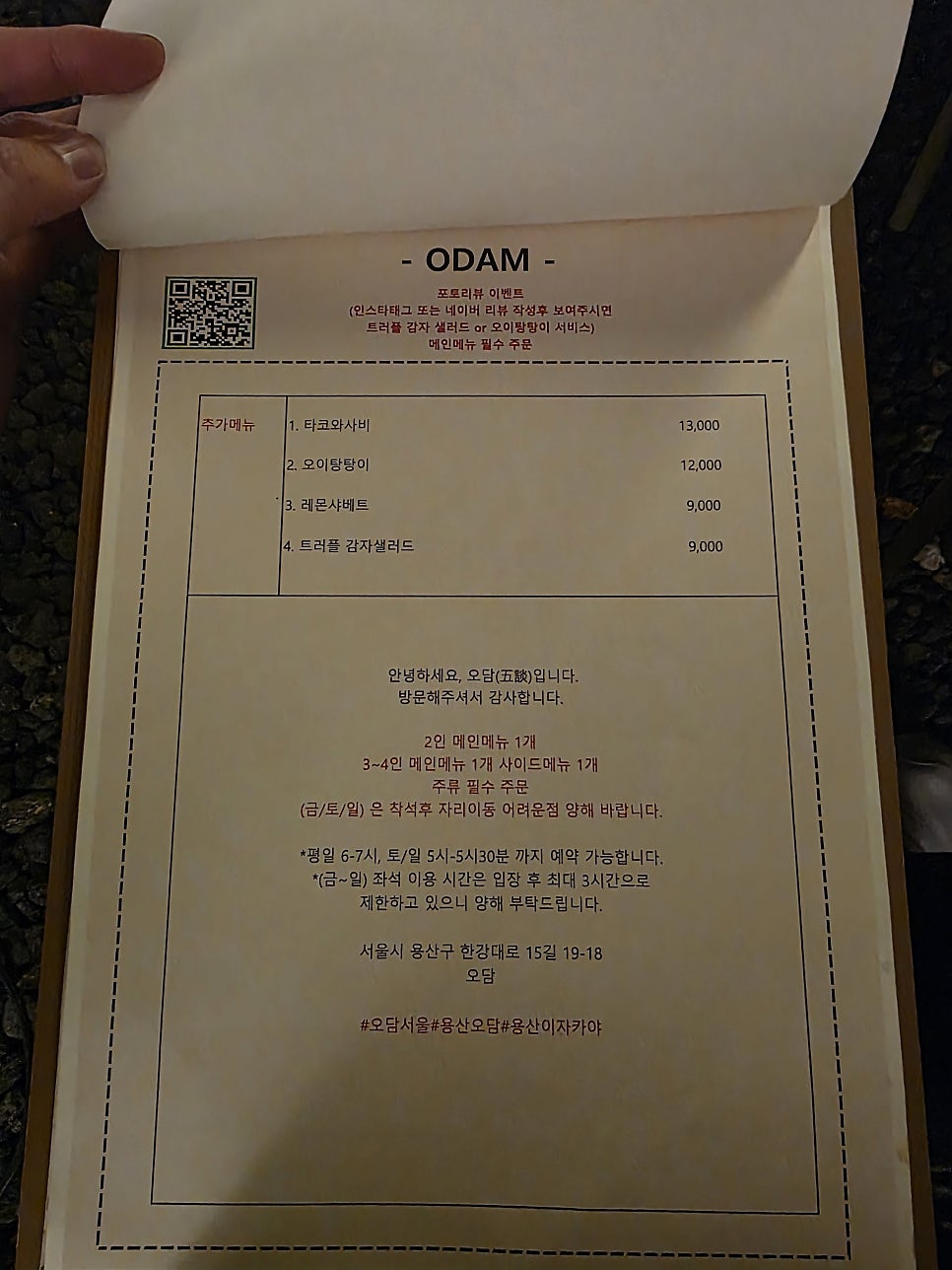
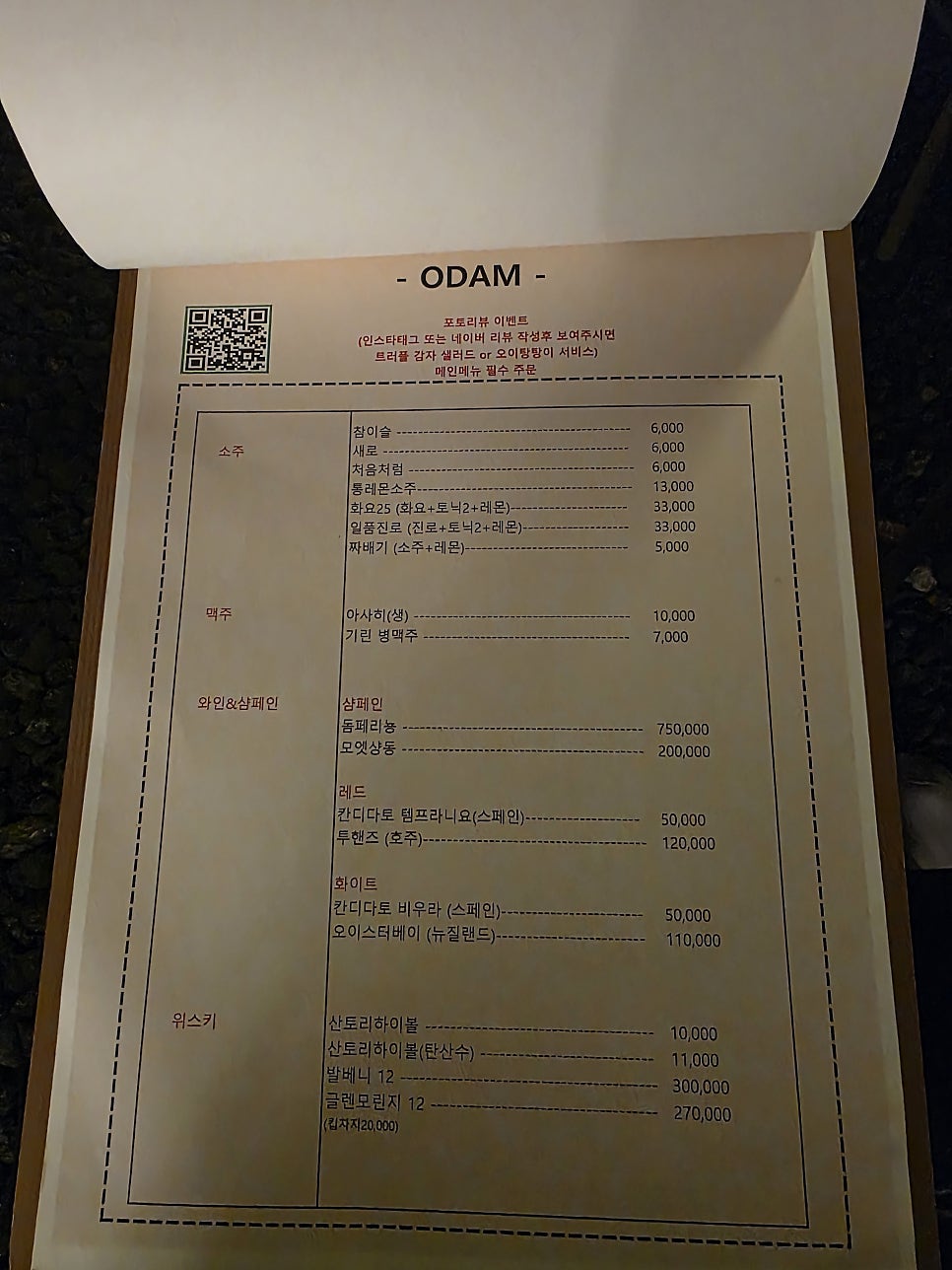
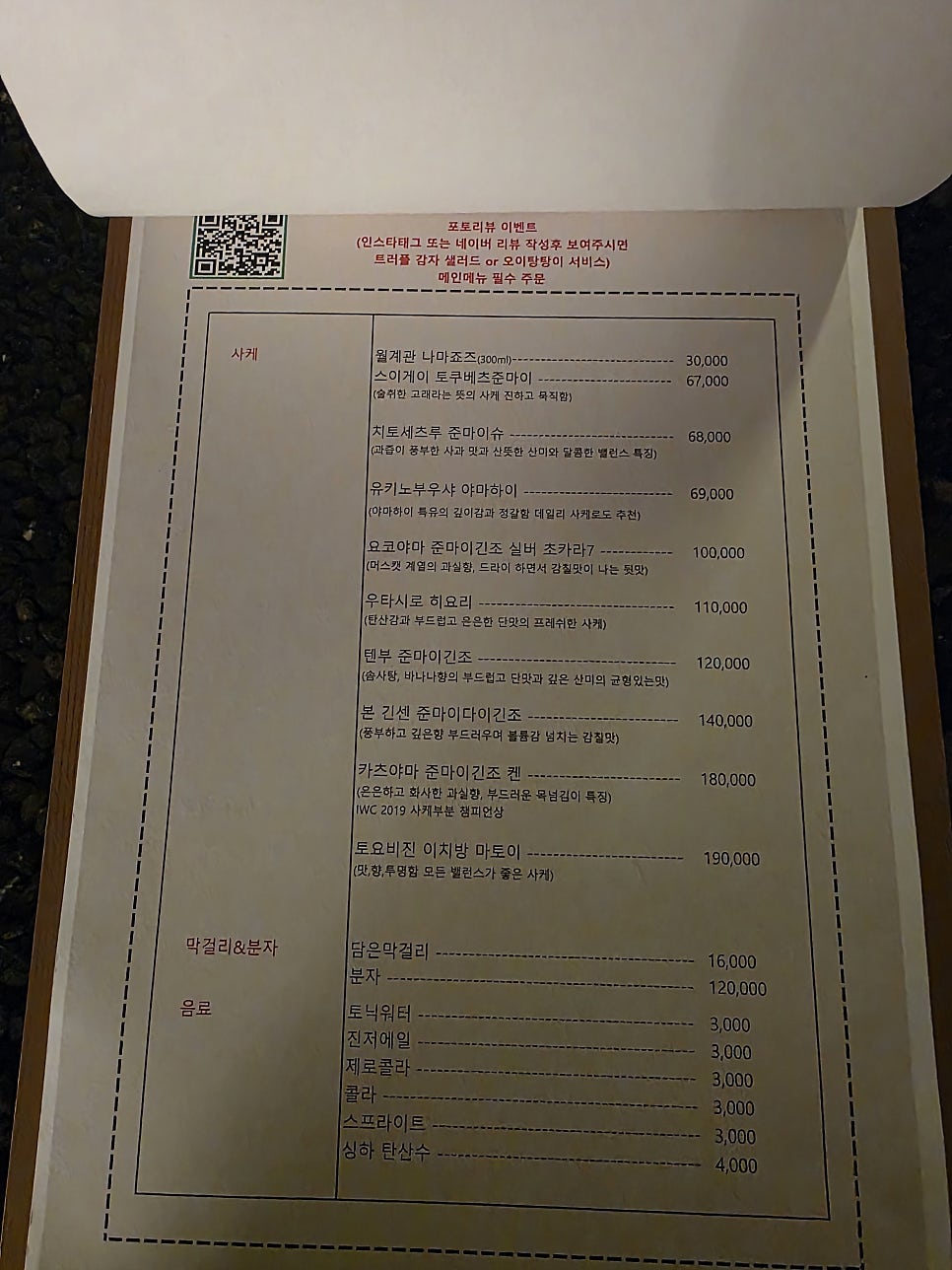
The menu is a clipboard with “ODAMI” printed at the top. The first page has the photo review event and the house rule: a main dish is required, in proportion to the group. We had come from a big pork dinner and only wanted sake. The staff were busy when they handed us the menu and did not mention the rule, and when we tried to order sake only the server sounded a little thrown. We looked again and there it was. Menu categories are sashimi, soups, hot dishes and fried dishes, each with a recommended item marked.
For four people that meant one main and one side. We kept it light.
Tako wasabi, brisket and sprouts
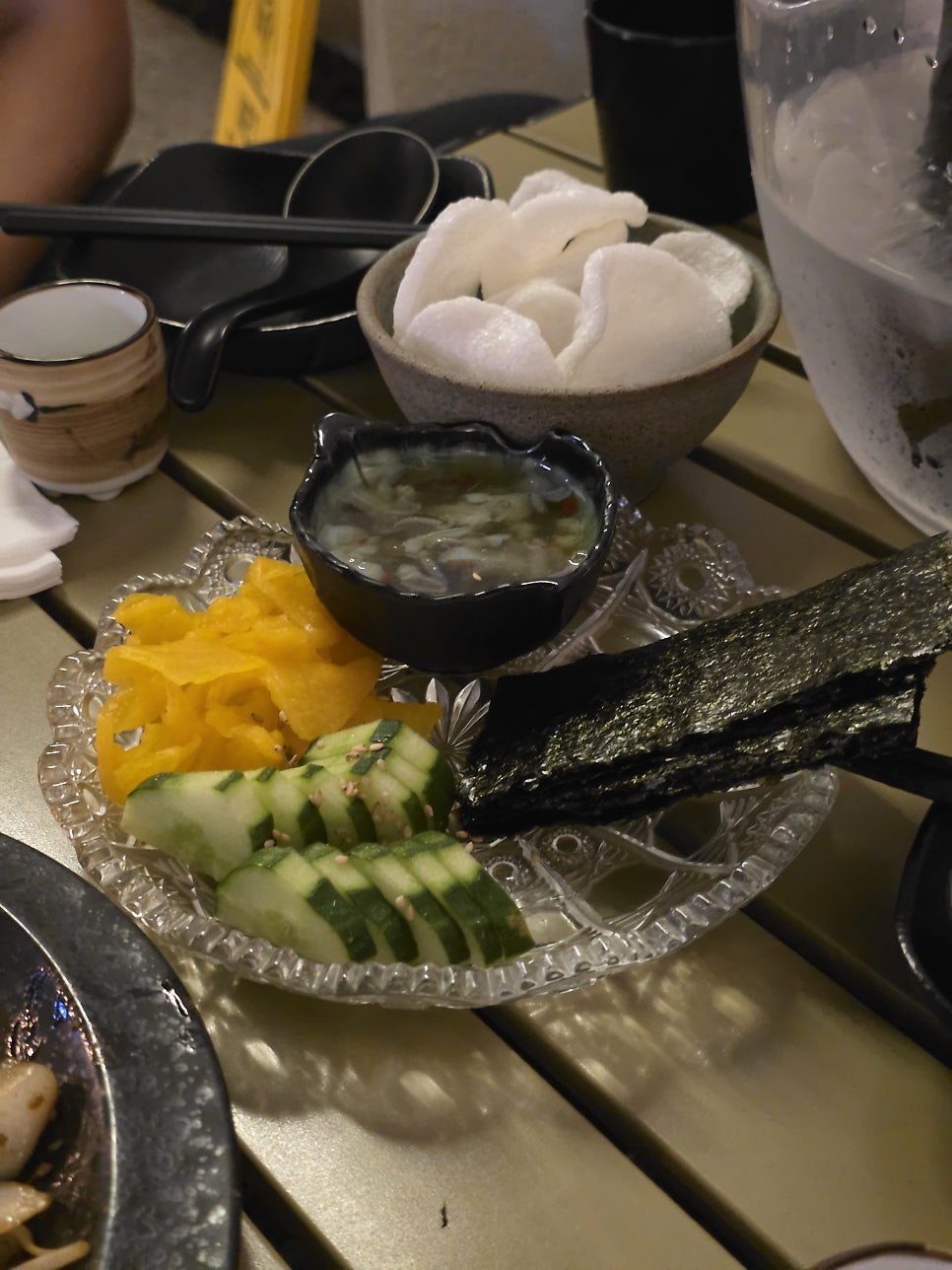
The side was tako wasabi, and the plating was fun. A vintage cut-crystal plate, big squares of gim seaweed standing up, cucumber slices and yellow pickles in a row, and the octopus in a small black dish with a dab of green wasabi and a slice of red chili. Shrimp chips came separately. You wrap the octopus and cucumber in the seaweed. The wasabi hits first, then the chew of the octopus. A classic with sake, and it works.
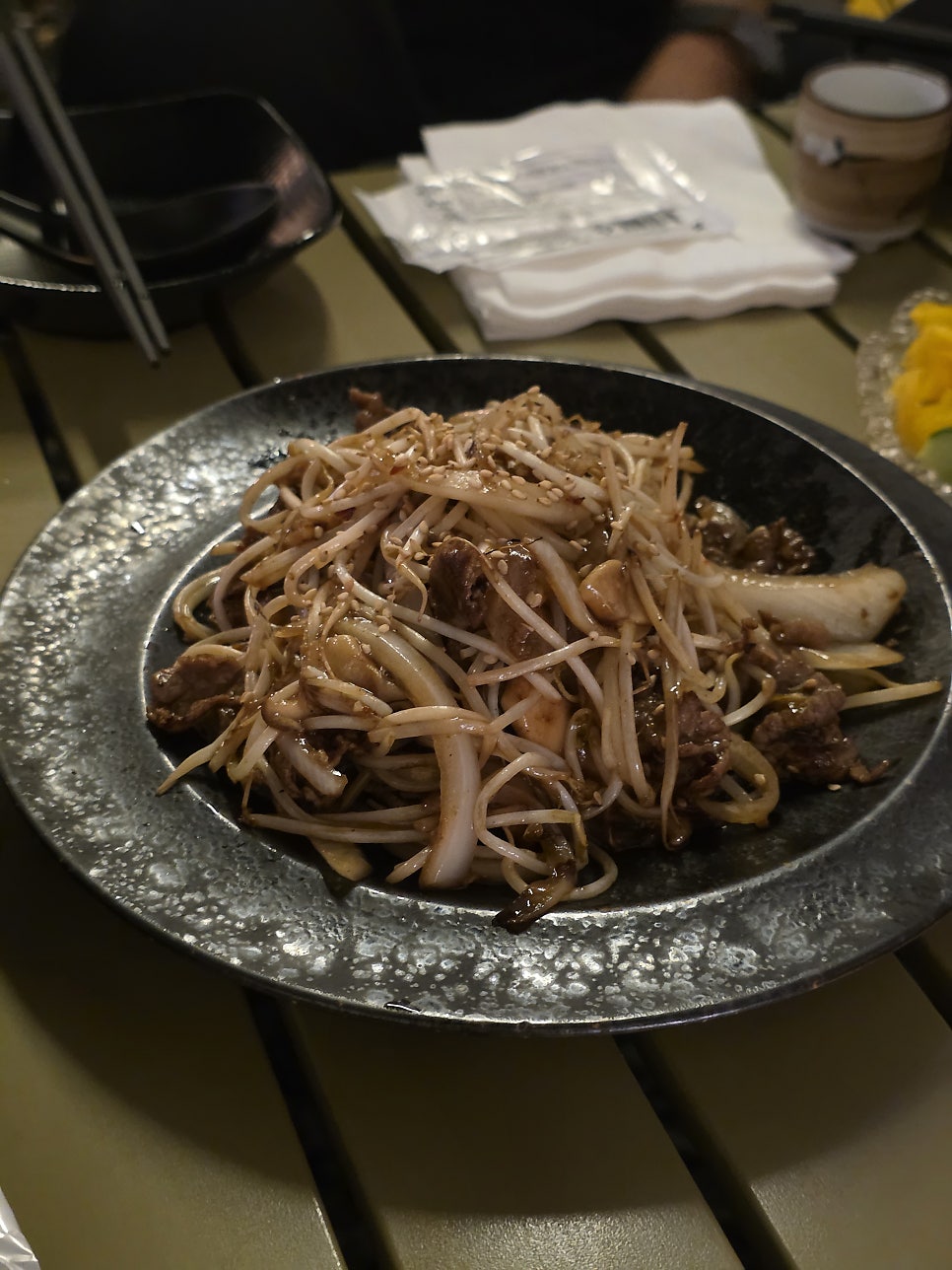
The main was 차돌숙주, chadol sukju: thin beef brisket stir-fried with bean sprouts in a dark sauce, scallions and sesame on top, served on a matte silver plate that suited it. The sprouts stayed crisp, so the dish had some bite. The brisket is sliced thin and the fat does not weigh on you. Between sips of sake it was about right.
Two sakes I had to look up
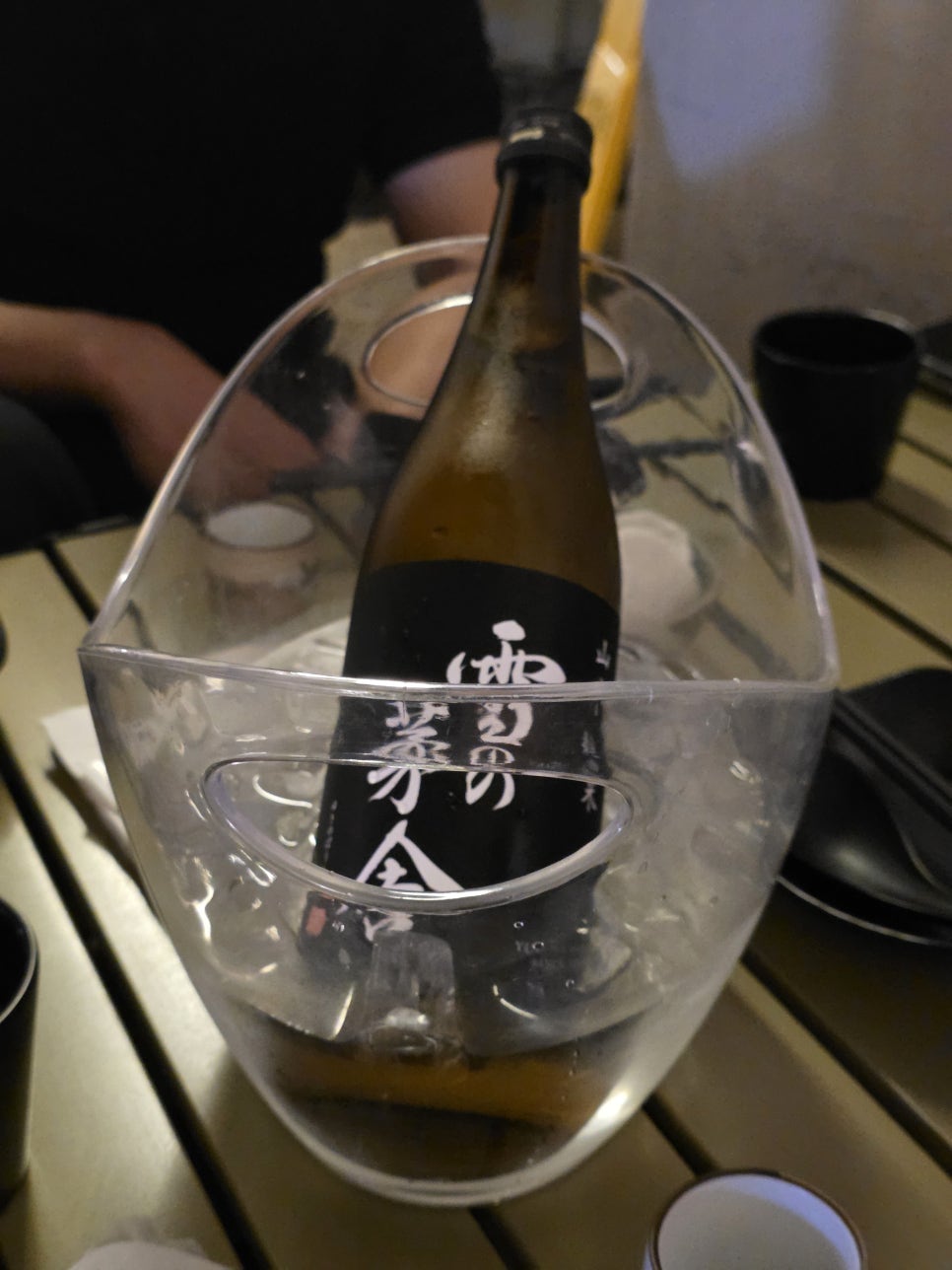
The first bottle was Yuki no Bosha Yamahai Junmai (雪の茅舎 山廃純米) from Saiya Shuzoten in Akita. I looked it up afterwards, partly because I am trying to learn. Yamahai is the old method where wild microbes start the fermentation on their own. Yamahai sake usually means a big nose and heavy umami. This one goes the other way: clear and fruity instead of loud.
In the glass it had a faint yellow shine and a subtle aroma with a little sweetness. What I remember is the texture. Smooth, almost creamy, and very easy to drink. A good first bottle.
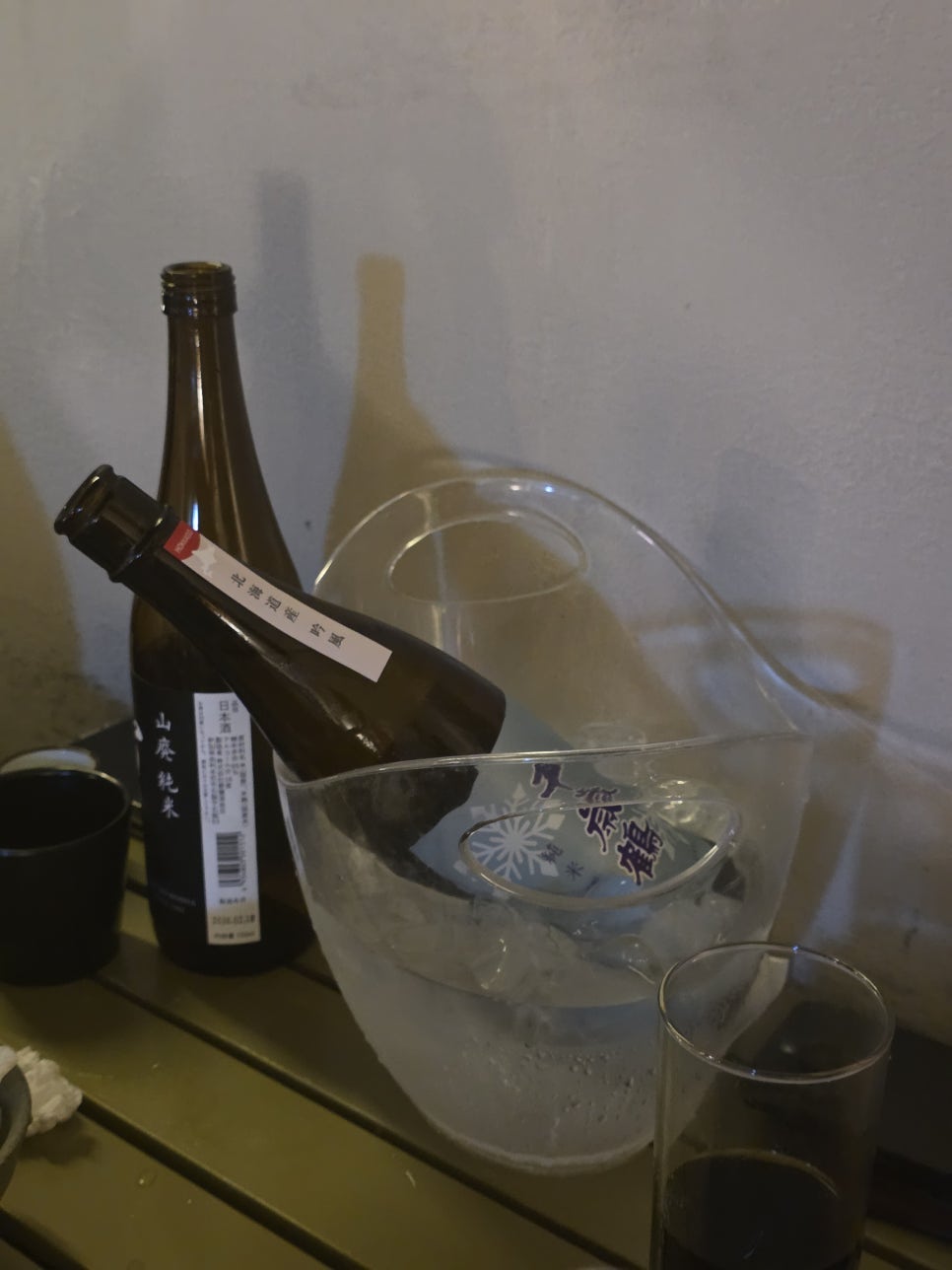
The second was Chitosetsuru Junmai Ginpu (千歳鶴 純米吟風) from Sapporo, made with Hokkaido’s Ginpu rice. On paper it sits slightly dry, around +3.5 on the sake meter. In the mouth it was apple-like acidity with a gentle sweetness, softer and cooler than “dry” suggests. This was my favorite of the two. Fruity, and it went down easily, which is what you want on round two. Maybe it was just my palate, but it tasted sweeter than I expected.
Korea is getting a lot more sake than it used to, and the more I taste the more I see how much the region, the brewery, the polish ratio and the fermentation method change things. I have decided I need to study. I have also decided it is too complicated.
Later in the evening
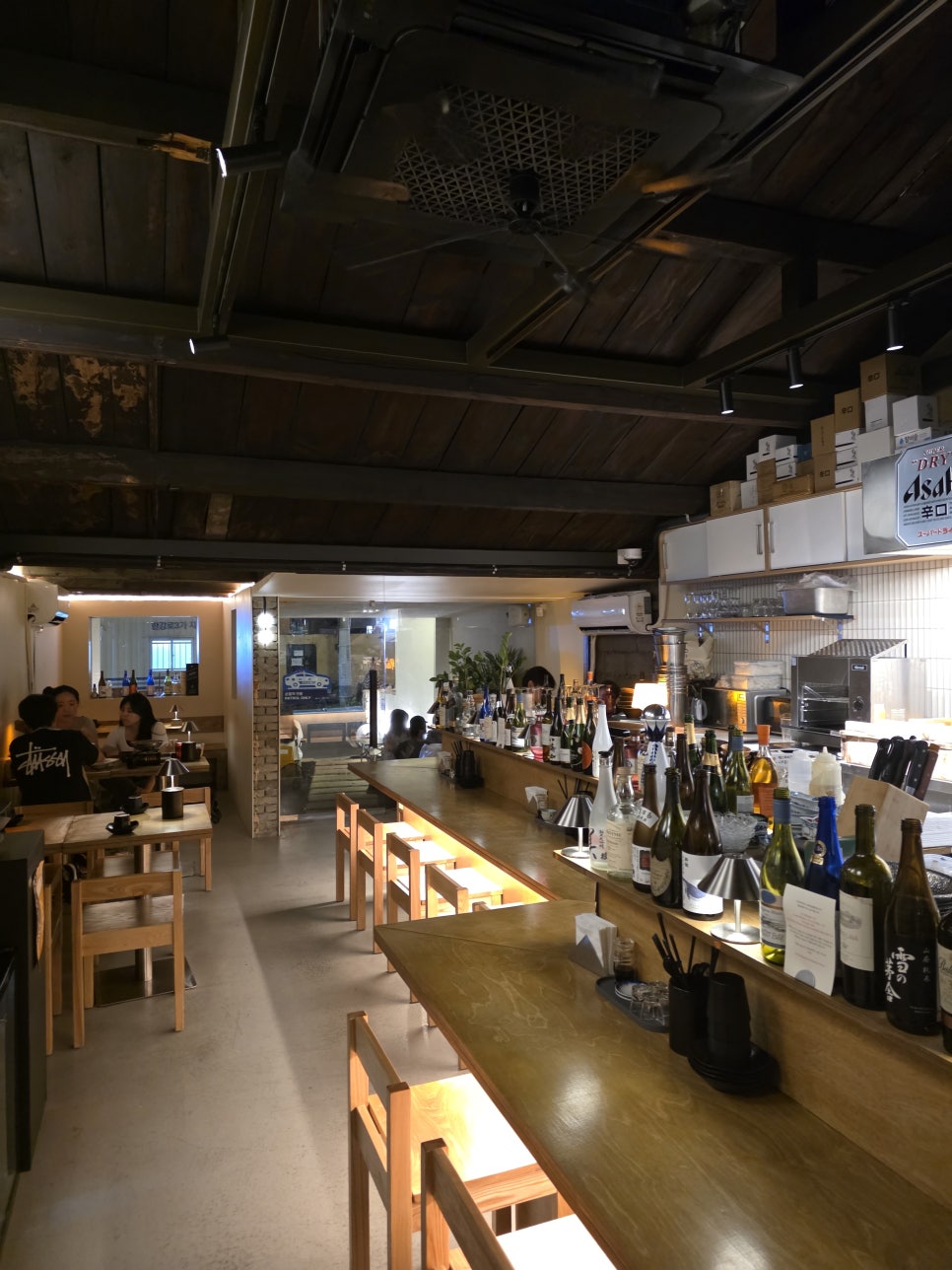
Later in the evening I went back inside for a look. The cooks were still at it and every seat was taken. It felt less like a Korean izakaya than a tiny stand bar in a Tokyo back alley.
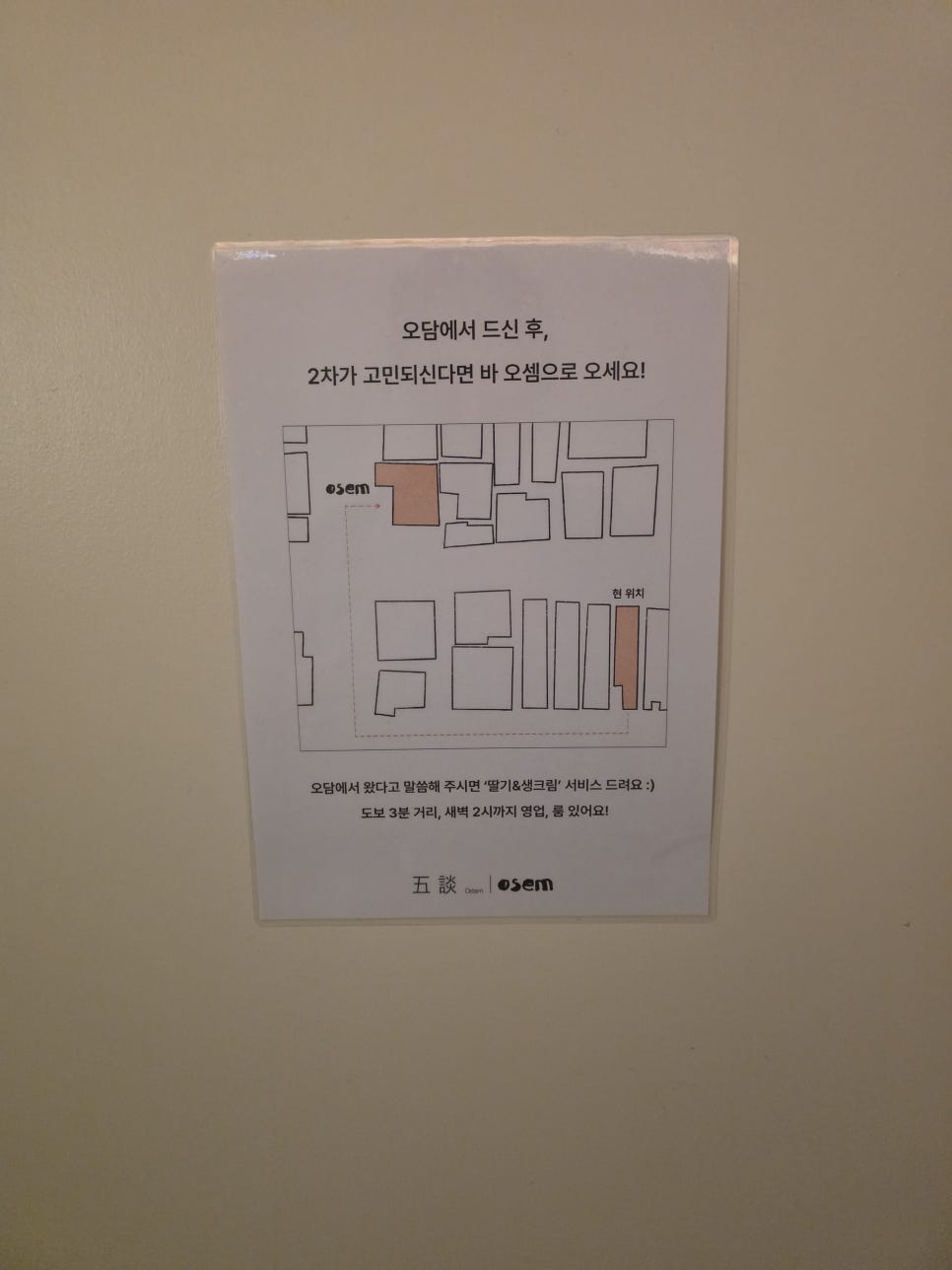
As we left, the staff handed us a card for Osem, a sister bar. The card said that if you mention you came from Odami, they bring out strawberries and cream. It is a three-minute walk, open until 2am, and has private rooms. So Odami takes round two and Osem takes round three, or the overflow when Odami is full. A signless bar in Apgujeong, Fine and Co (Cricket Seoul), runs the same way. I want to try Osem next time.
I’d recommend Odami for drinks after dinner near Yongsan or Samgakji, and for anyone curious about sake; the list includes bottles like Yuki no Bosha and Chitosetsuru that are not well known in Korea, so it is a good place to try something new. If the yard has a free table, take it. Summer and early-autumn nights are what it is built for, and it fills early. One thing I missed: the menu does not mark sakes dry or sweet the way a specialist bar would, so ask. Next time I’ll come earlier for a yard seat, order the sashimi we skipped, and finish at Osem.
My rating: 4.7/5. The yard and the Chitosetsuru are reason enough.