Ganso Aburado, Sinyongsan: abura soba the Tokyo way
Korean original on Naver blog ↗Korean version, 한국어로 읽기 ↗
I should say up front that I paid for this meal, and that I have written about Ganso Aburado before. I like it enough to write about it twice.
The first branch opened in the Mario Outlet in Gasan, and I was glad to see a proper abura soba place in Korea at all. Then a second branch opened in Sinyongsan, on the hill above the station, and I went on a date.
Abura soba is still a small category here. People describe it as ramen without the broth, which is close. The noodles come with a thick sauce at the bottom of the bowl and you mix everything yourself. It started in a student neighborhood in Musashino and there are chains all over Tokyo now. Ganso Aburado’s full name is 元祖油堂, which translates roughly as the original abura hall. The name is a claim, and the shop behaves like it means it.
Before you go
| Item | Notes |
|---|---|
| Finding it | Same building as Machida Shoten ramen. The ramen shop is on the ground floor; Ganso Aburado is downstairs in the basement. Follow the red neon |
| Ordering | Kiosk at the bottom of the stairs. Staff will walk you through it if you get stuck. Noodle upsizing was free when we went |
| Getting there | An easy walk uphill from Sinyongsan station. No parking; I parked at the Amorepacific building because I was going there for coffee afterwards |
| Korean name | 간소아부라도 신용산점 |
The right door
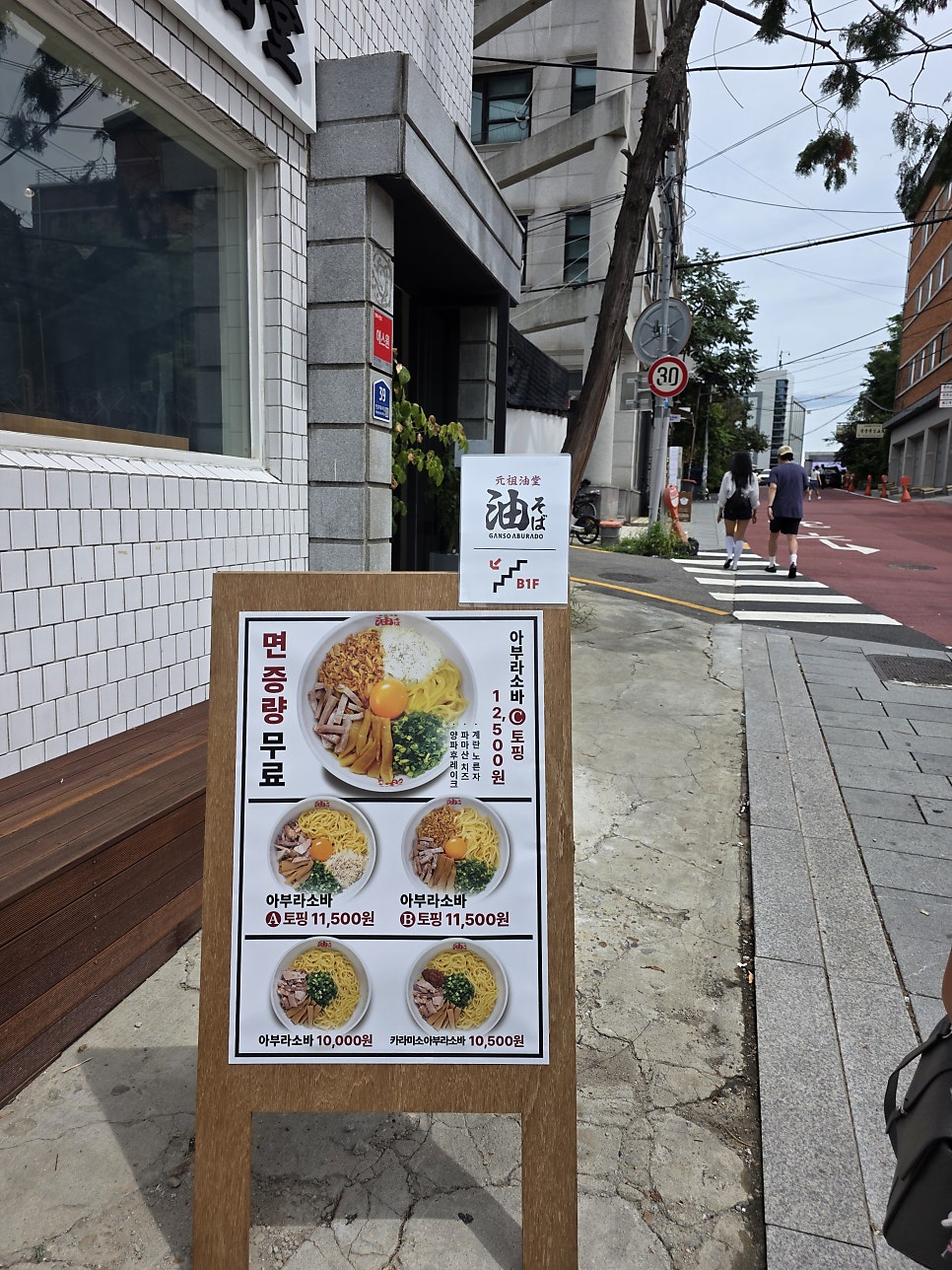
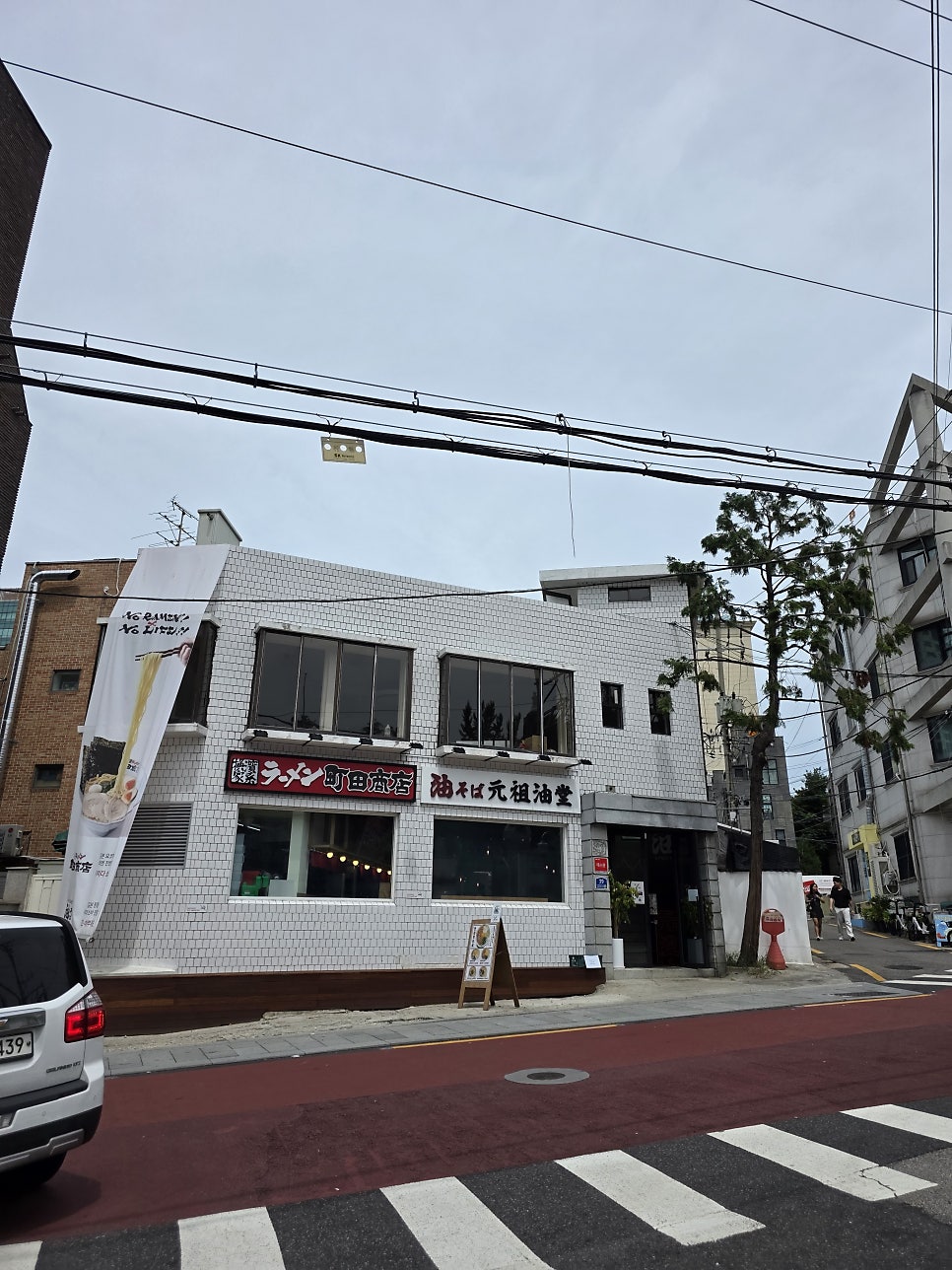
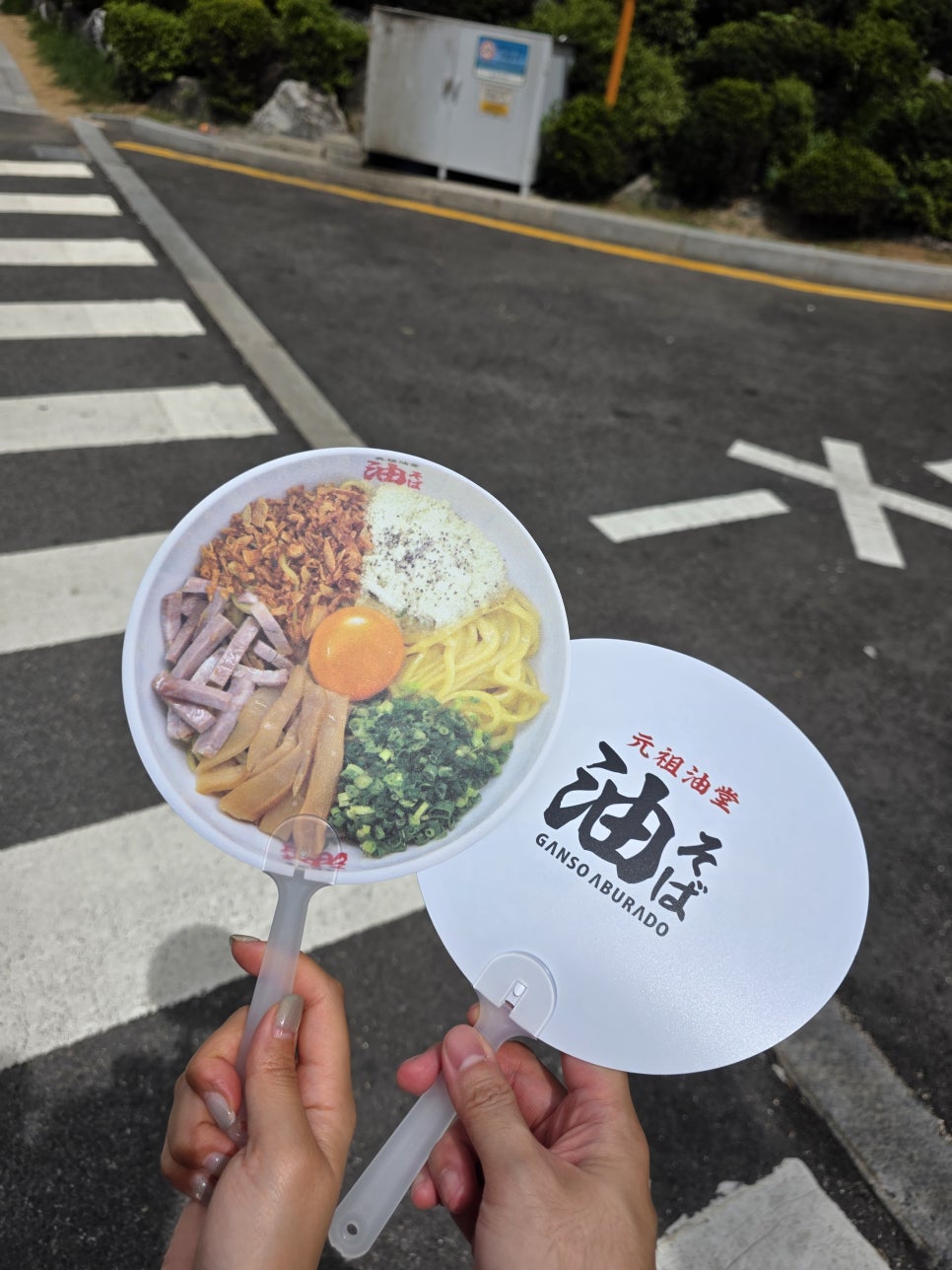
The building is white tile with a big sign reading 油そば 元祖油堂. Outside there were paper fans for people waiting, the shop name on one side and abura soba on the other, which I liked more than I expected to.
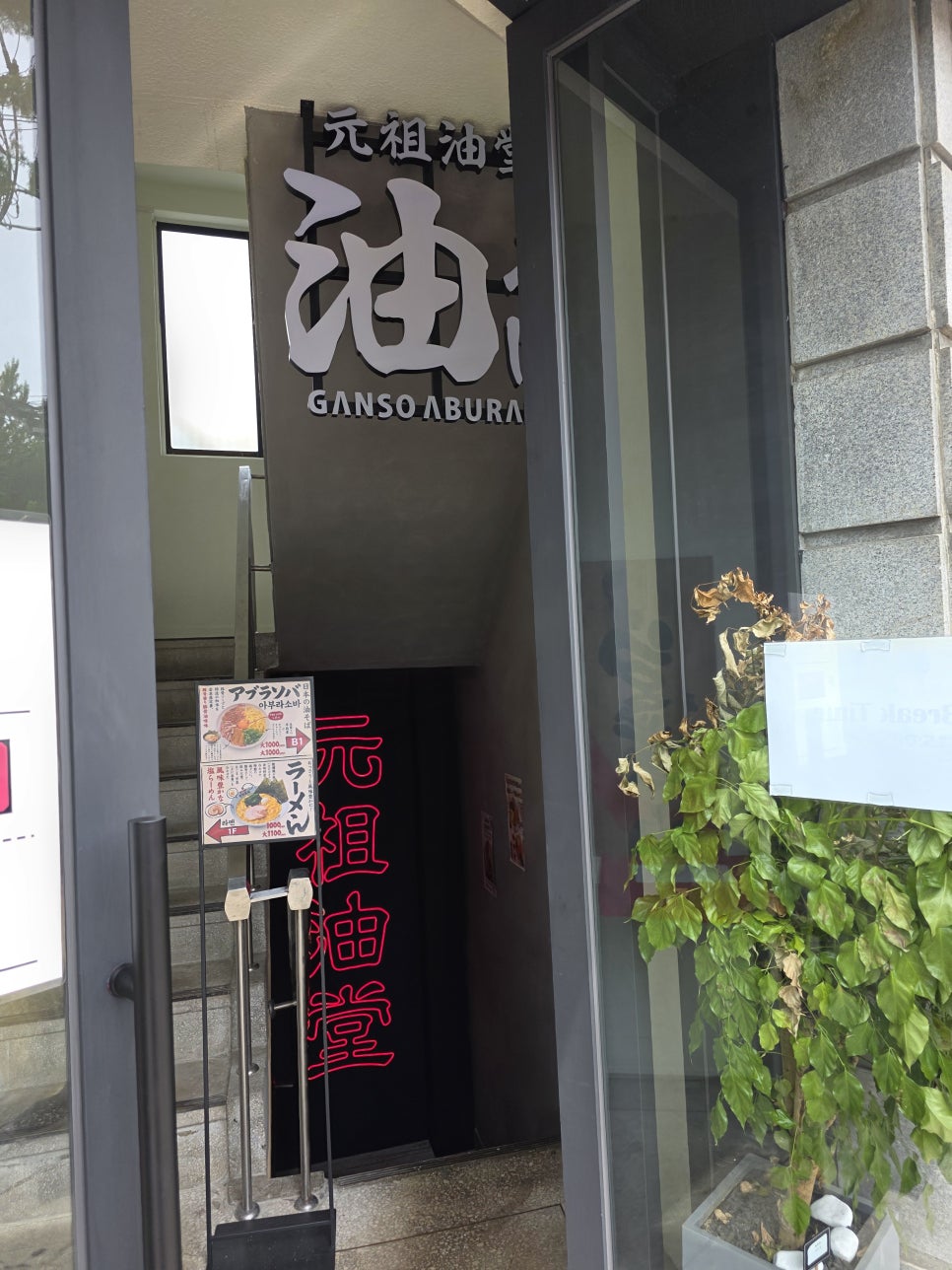
Here is the thing that will confuse you. Right next to that sign is another one for Machida Shoten, a well-known ramen chain. Both are in the same building on different floors. The answer is to go down. Ramen is upstairs, abura soba is in the basement, and the red neon and the menu photos at the top of the stairs tell you when you are in the right place.
Downstairs is industrial in the way the Tokyo originals are: exposed electrical panels and bolts, cement-toned walls, a large round logo on one wall. What is different is the seating. In Japan these places are mostly counters, built for eating alone and leaving. Here there are counter seats and proper tables, which is why couples and weekend families can sit comfortably. It is a small Korean adjustment and I liked it.
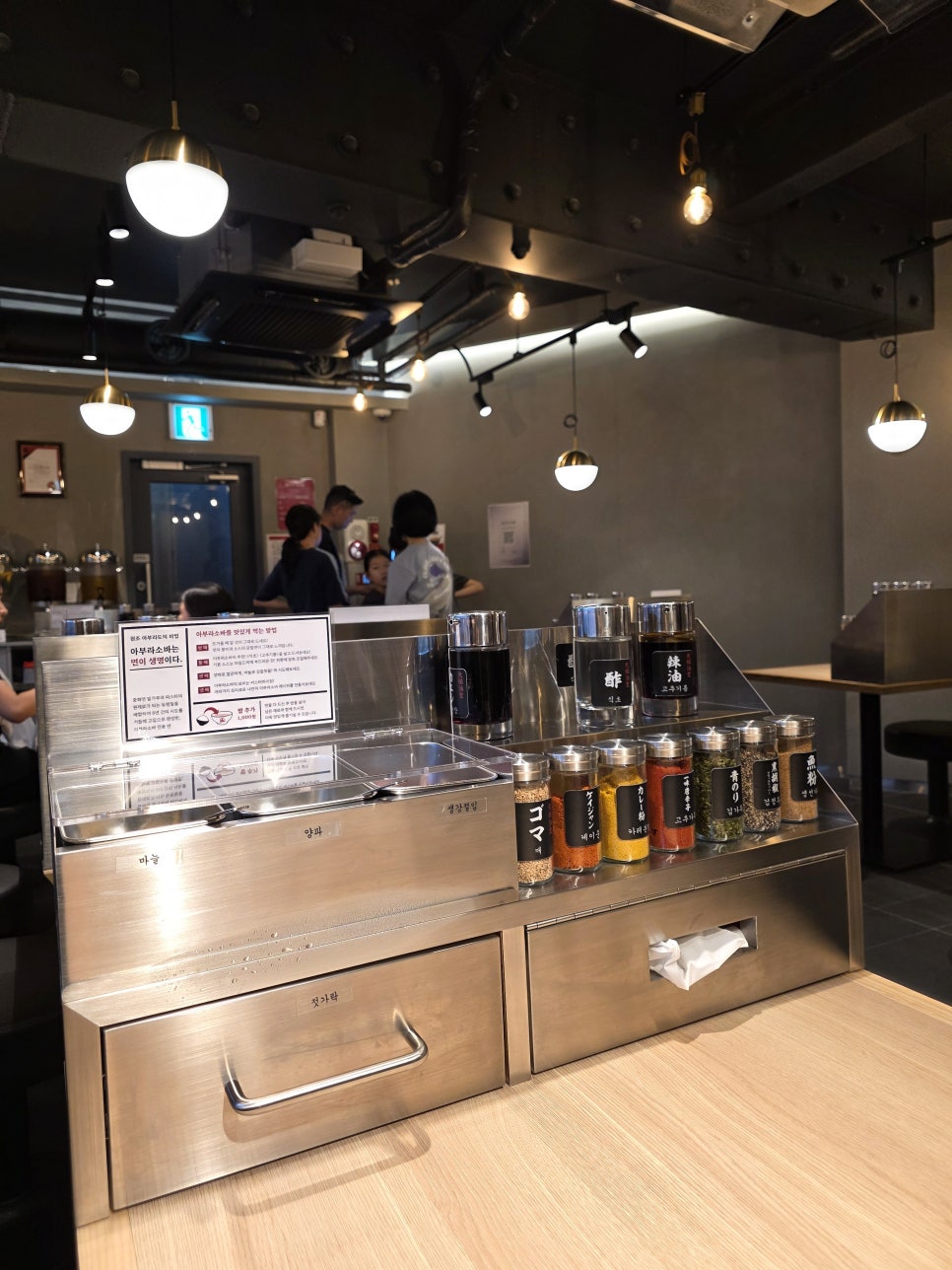
In front of each seat is a stand of about ten black-labelled bottles: the house seasonings, kombu vinegar, spices. There is also a self-serve drink station with an ice machine and teas, exactly as in Japan.
What I ordered and how I ate it
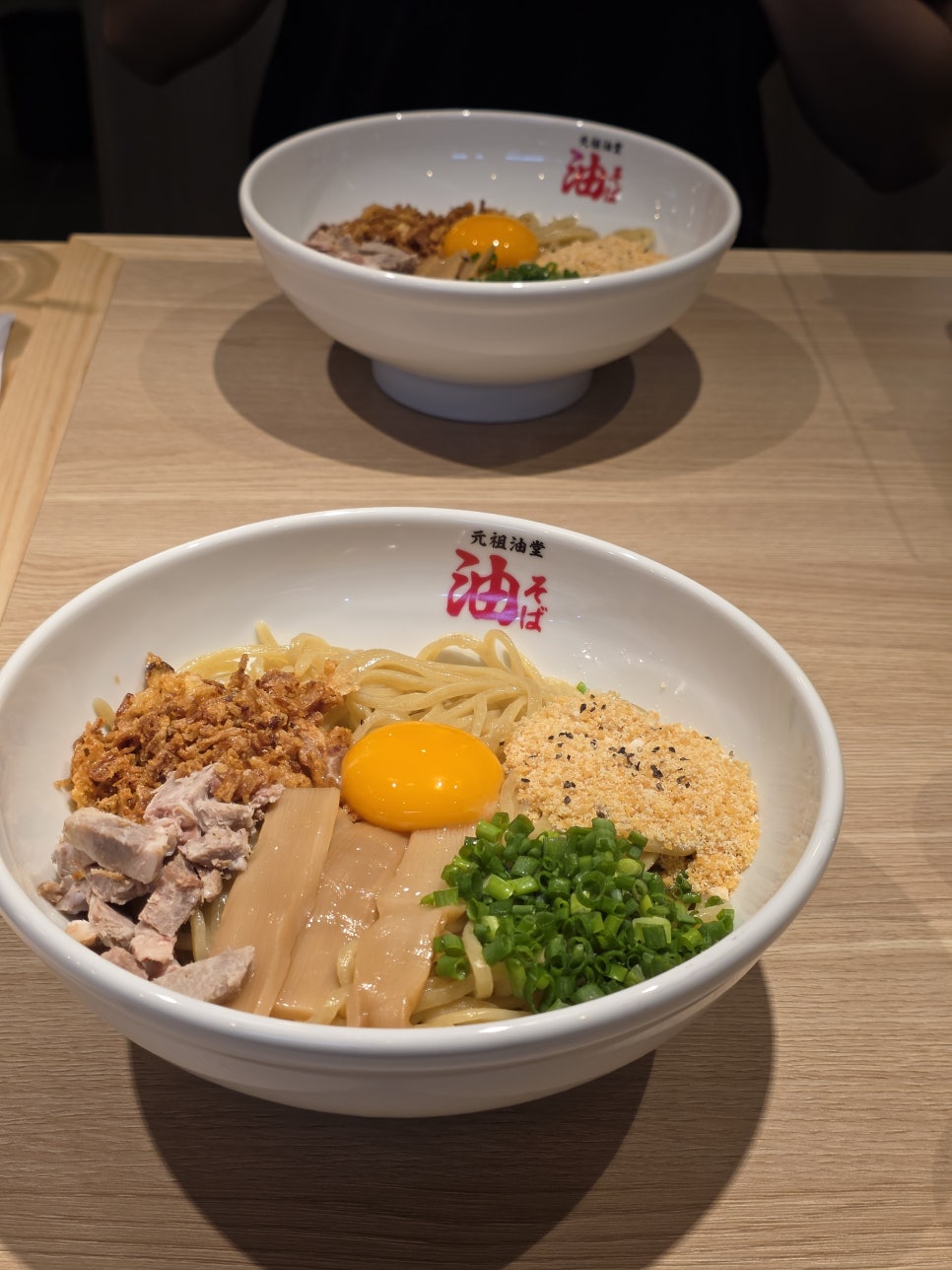
I always order Type C. There were two of us, so one each, with 200 grams of noodles.
Do not go big on the noodles. There is a rice finish at the end, and 200 grams leaves room for it.
The bowl arrives with a whole egg yolk on top of yellow noodles, with bamboo shoots, chopped spring onion, tempura crumbs, sliced pork and sesame around it. That is the classic first look. Break the yolk, mix in the sauce and seasonings, and start.
Two things I do every time:
- About halfway through, add a ring of kombu vinegar. The bowl changes character. You get a rich, sauce-heavy first half and a sharper second half, almost two different dishes.
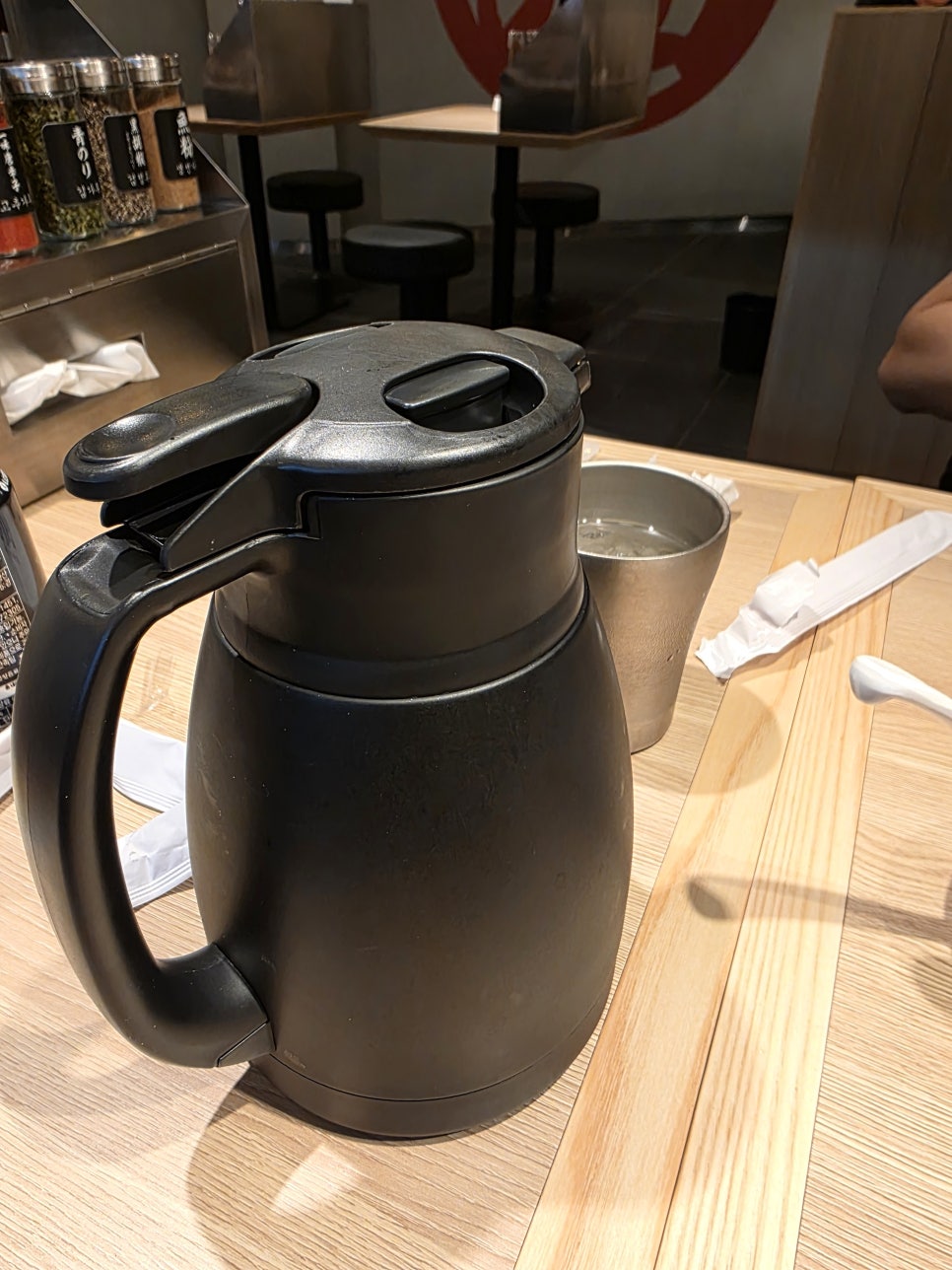
- Near the end, leave a little of the noodles and toppings, ask for rice, and pour in the broth from the thermos pot. I only learned this by watching a very composed woman at the next seat in Tokyo do it. It is what people who have eaten abura soba for years do, and it is the best part.
While I was turning around to look for the broth pot, a staff member appeared and offered to help before I had asked. That kind of attention is not common, and I noticed it.
The details I keep thinking about
Basement restaurants often have awkward toilets, or send you to another floor. This one carved out a clean, separate restroom from a narrow gap in the plan. It is the sort of thing you only see if you look, and it told me the owners had thought about the whole place, not just the bowl.
I also noticed how they are expanding, which is a personal interest. Most brands open first in Gangnam, Hongdae or Itaewon and grow from there. Ganso Aburado opened in an outlet mall in Gasan, spent a long time with an office-worker lunch crowd, and then chose a lower-rent spot on a hill in Sinyongsan for the second branch. That is a patient way to build a category that barely exists here yet, and I think it is the way to last.
I took a paper fan on the way out.
I’d recommend it if you like Japanese food but are tired of ramen, if you work in one of the office towers nearby and want a fast lunch that is better than it needs to be, or if you want a quiet weekday date where the food does the talking. Next time I want to come with someone from my old firm around the corner and show them the rice trick.
My rating: 5/5. Not a place I plan to revisit so much as a place I come back to whenever I can.