Ganso Aburado, Gasan: Tokyo abura soba, first overseas branch
Korean original on Naver blog ↗Korean version, 한국어로 읽기 ↗
I go to Japan often, Tokyo most of all. Eight trips at least, enough that immigration officers sometimes pause at the stack of stickers. I wish more of them were business trips. Almost all were for pleasure.
Ramen is what everyone searches for in Tokyo. It is on every corner, the way gukbap is here. The dishes next to it get less attention: abura soba, tsukemen, mazesoba. Tsukemen and mazesoba have made it to Seoul with real restaurants behind them. Abura soba never quite did. Search for it here and you get a handful of places, most of them confusing it with mazesoba. It is a different thing: no broth, thick noodles tossed with oil and soy sauce and whatever seasonings you add yourself.
I learned it by accident in Kamiyacho, near Azabudai Hills, when I saw a queue outside one shop and joined it. That was Ganso Aburado. It became the place I eat at every time I am in Tokyo. So when I heard the brand was opening in Korea, I waited from the announcement. And it opened not in Gangnam, Hongdae or Itaewon, but on the 12th floor of the Mario Outlet in Gasan Digital Complex.
Before you go
| Item | Notes |
|---|---|
| Ordering | Type C is the full-topping bowl. Noodles come in small, medium and large. Order a bowl of rice with it, for the reason below |
| Timing | Weekend afternoons fill up with outlet shoppers. On a Saturday around 2pm we got seats, but the counter was full soon after. Early lunch or late afternoon is calmer |
| Getting there | Gasan Digital Complex station, Line 1 exit 2 or Line 7 exit 6, then a short walk. Driving: Mario Outlet basement garage, elevator to the 12th floor |
| Korean name | 간소 아부라도 |
Tokyo, on the 12th floor of an outlet
In Japan, abura soba is its own category, separate from ramen, tsukemen and mazesoba. It started as a cheap, brothless way for students in Musashino to fill up, and Tokyo now has several chains built on it. Ganso Aburado, literally the original abura hall, is one of the faces of the category, with branches in Shinjuku, Shibuya, Kamiyacho and elsewhere. The Mario Outlet shop is its first outside Japan. Why Gasan? The outlet was rebuilding its 12th-floor food hall and wanted a symbolic tenant, I was told. We went soon after opening and have been back every month or two since: with my wife, with colleagues, and alone when the craving hits.
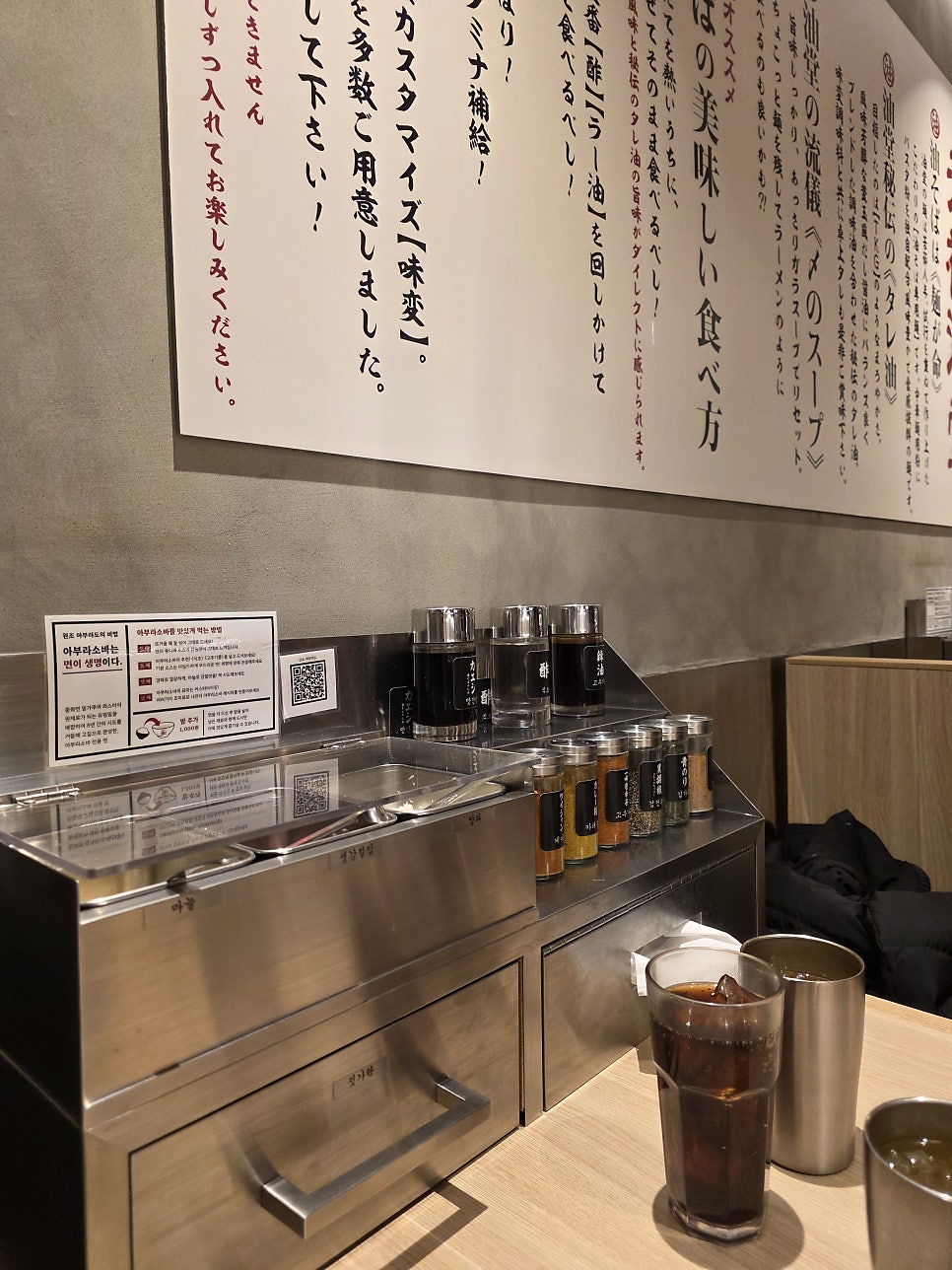
Walk in and it is a Tokyo shop transplanted whole. The counter is the center of the room. A tall vertical sign on the back wall reads 油そばの美味しい食べ方, how to eat abura soba deliciously, the same one you see in Tokyo. A bold red logo and a mural of a bowl on the right, black speakers on the left, gold pendant lamps in a row over the counter. It does not feel like the top floor of an outlet. It feels like a small noodle shop in a Tokyo side street.
There are wooden tables beside the counter for two or three people. We have sat at both, and the mood shifts slightly depending on where you are, which is part of the fun.
The seasoning stand
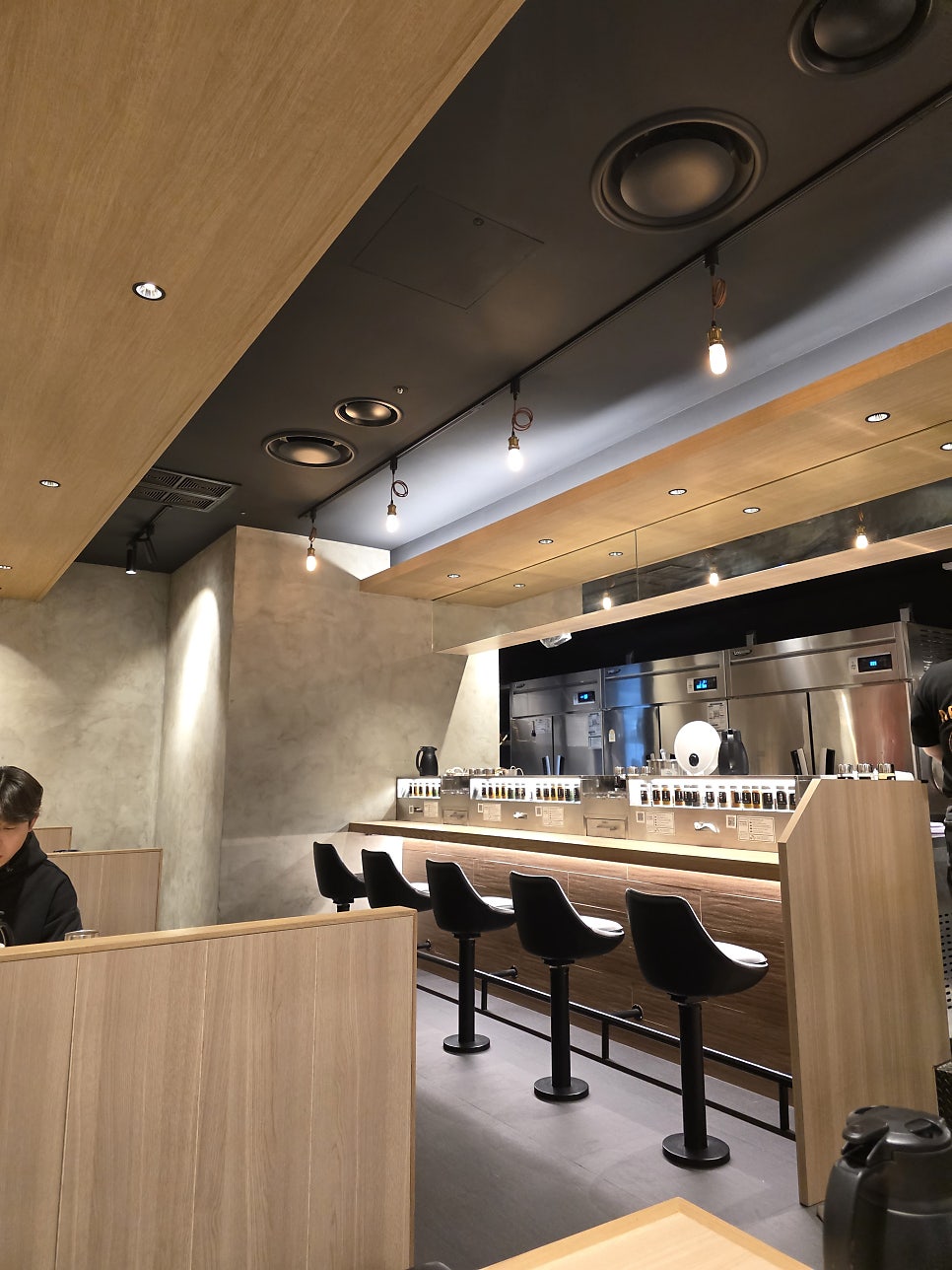
Every seat has a row of bottles labeled in katakana and Korean: cajun, curry powder, chili, aonori seaweed, black pepper, fish powder. Beside them, vinegar and rayu chili oil, and garlic. Some seats also have kombu vinegar, chopped onion and minced garlic. The combinations keep growing. Labels change with the season, so read them when you go.
The menu explains the four steps. First, a mouthful as it comes. Second, two rings of vinegar and one of rayu, mixed well. Third, whatever seasonings you like, changing the bowl as you go. Fourth, rice in the leftover sauce, or the side soup poured in to finish. Follow that order and one bowl gives you three or four different dishes.
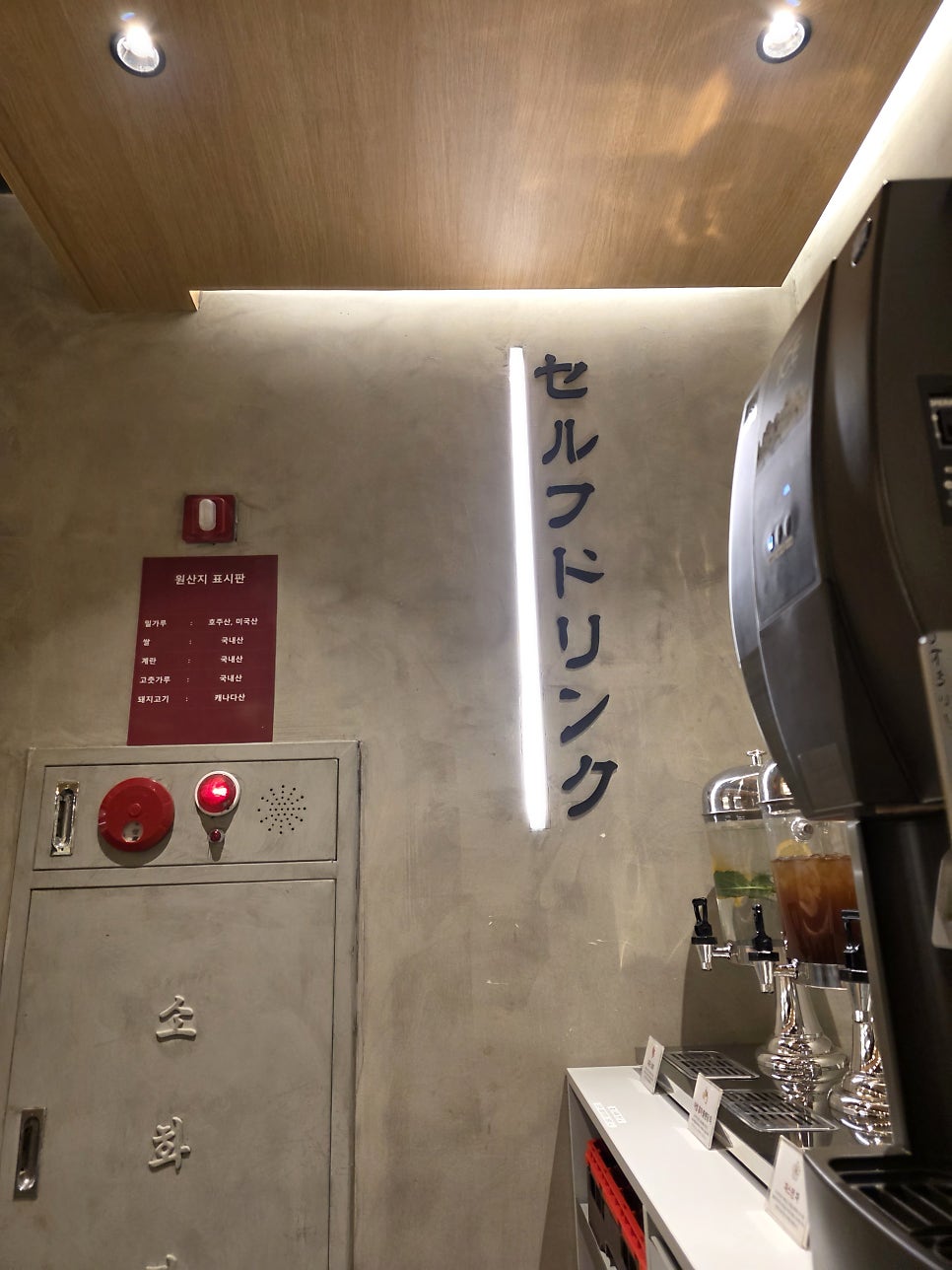
A self-serve drink corner along one wall has an ice machine, a drink dispenser and a tea server. Abura soba is oily, so you drink a lot of water and tea, and it is nice to do it without flagging someone down.
How we ate it
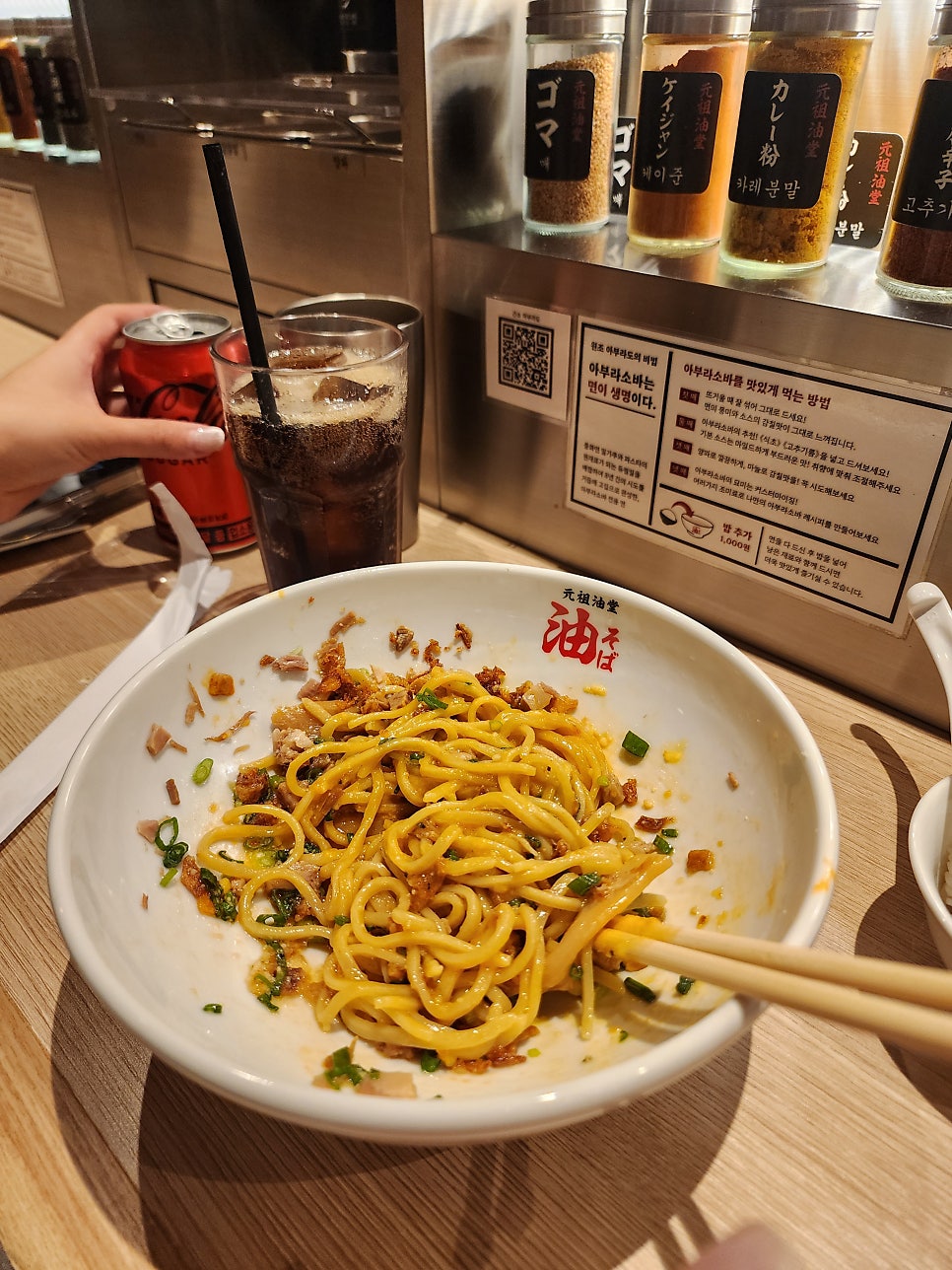
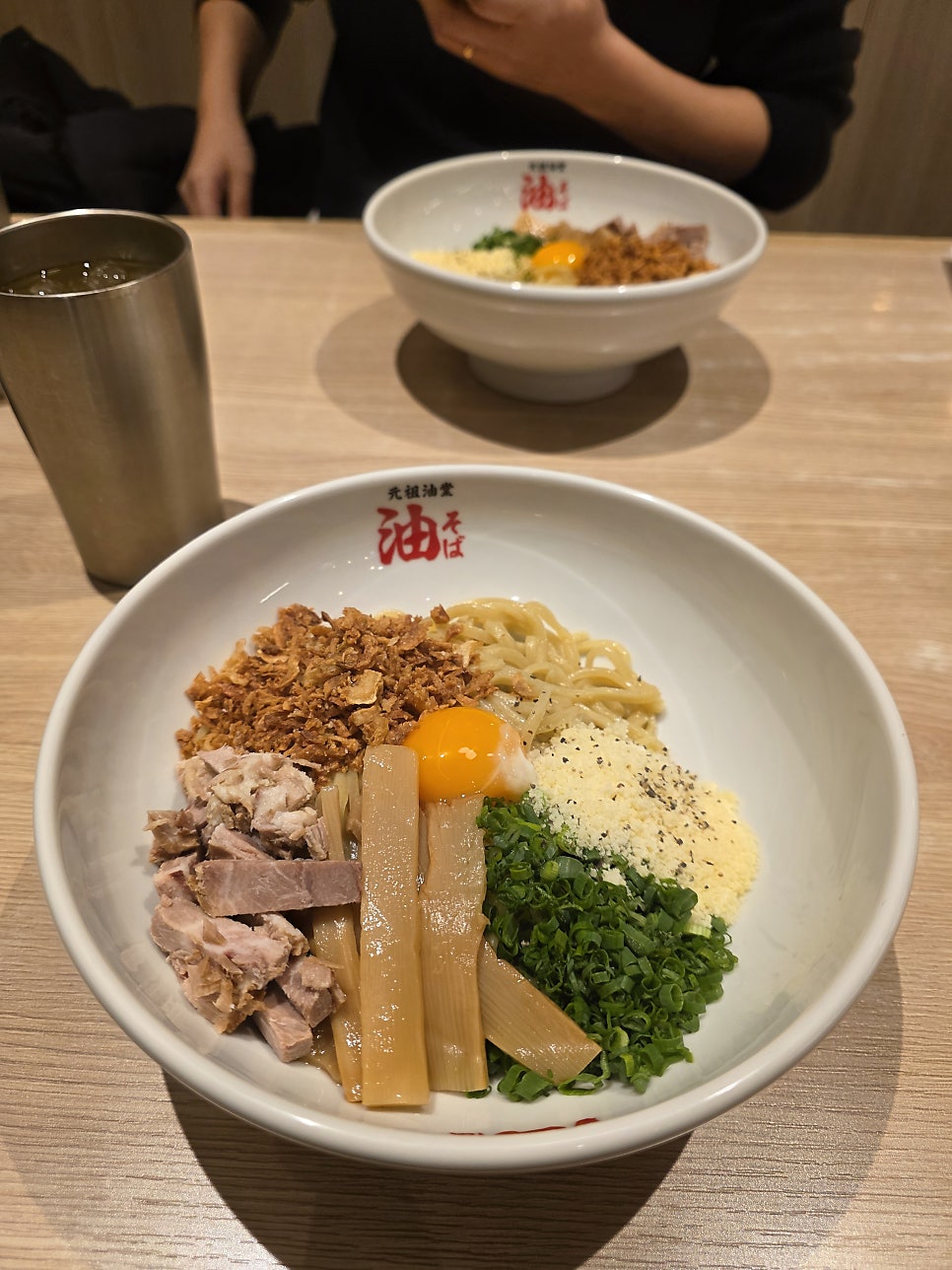
We ordered Type C, all the toppings, medium noodles, plus rice. The bowl arrives with thick yellow noodles, made in the shop, under chopped chashu, menma bamboo shoots, chopped spring onion, fried onion, parmesan, and a yolk in the center. The first plain mouthful already tells you this is not ramen and not mazesoba: no broth, but the noodles carry the sauce cleanly.
Then the weapon. Vinegar and rayu lift a little acidity and heat over the base. A pinch of cajun, later some curry powder, then aonori and black pepper once the bowl is half down, fish powder near the end. I change the order every time. The bowl next to mine is never the same color as mine, and my own bowl goes from plain yellow to cajun red to seaweed green and fish-powder brown before it is done.
Here is the part other write-ups skip. Most people think you eat the noodles and leave. People who eat this often in Japan always order rice. After all that seasoning there is sauce left at the bottom, and if you tip rice into it you get something richer than mazesoba, closer to a chashu rice bowl. So I always order rice, leave some sauce, and I order medium noodles precisely to leave room for this. Last comes the soup finish: pour the side soup into the bowl and it settles everything like a bowl of ramen broth. That clean feeling at the end is one reason I keep coming back.
What kind of place this is
To be clear, this is not a premium brand. In Japan it is a working-class chain. At the Tokyo branches the person next to you is a salaryman in a suit, a construction worker still in his work clothes, a student. Everyone slurps, pays, leaves. I seek out chains like this on every Tokyo trip because there is one reason people keep going: it is good. That is why the brand lasts.
The Mario Outlet branch keeps some of that. Couples who came to shop and got hungry, groups of coworkers, and people like me who drove out for it. It does not pretend to be anything fancier than it is, and that is the charm. I have thought more than once about opening a branch myself.
Compared with Tokyo, the seasonings, the noodle thickness and the room are nearly identical. The Tokyo shops are more counter-only and faster-turning; the Gasan branch has tables and is roomy enough for families with children. That is the Korean branch’s advantage. If you visit the Kamiyacho branch, search Google Maps for 元祖油堂 神谷町 and it is a short walk from Azabudai Hills.
I’d recommend it to couples spending a weekend at the outlet who want lunch that is better than food-court food, to people who work in Gasan and need one more good option, to anyone who ate abura soba in Japan and wants it back exactly, and to ramen regulars who want to open one more category. If you prefer soupy ramen or light udon, the first impression may feel heavy. Next time I am going large on the noodles and ordering two bowls of rice, skipping the soup finish and going full chashu rice.
My rating: 4.5/5. The Tokyo bowl, nearly unchanged, is enough for me.