O.D.D Cola, Hyehwa: craft cola on the way up to Naksan
Korean original on Naver blog ↗Korean version, 한국어로 읽기 ↗
A weekend in Daehak-ro, on a date or with friends, usually means a play, dinner, maybe a drink. Most people park at the Korea National Open University, cross the theater district and spend the evening in the same few blocks: the chain cafes by Marronnier Park, the coffee shops near the small theaters, the cafe street toward Sungkyunkwan. The problem with Daehak-ro is what to do after the theater or dinner. There are bars and cafes across the road, but nothing much else. Sometimes we skip the park and walk up toward Naksan instead. And I get tired of coffee and watermelon juice.
I like things made by hand. When someone takes something so ordinary that nobody thinks about it any more and tries to rebuild it with their own philosophy, I want to cheer them on and try it. A MacBook rebuilt on a Raspberry Pi, or a cola made from scratch when the real recipe has been secret for a century.
I had known about this shop for about two years. I came across a forum post from someone announcing they were going to try making craft cola. I checked in on the thread now and then: fans chipping in packaging ideas, the story of opening a physical shop. I meant to go, got busy, went to Daehak-ro a few times and missed it. This time I planned dinner nearby, and finally walked up the hill after.
Before you go
| Item | Notes |
|---|---|
| Ordering | Two of us had a cola ade and a milk cola. Syrup is sold by the bottle too: 350ml plastic, 500ml glass, 750ml plastic. The glass one is the pretty one |
| Seating | A few seats, but this is a take-away place. Most people carry the cup up toward Naksan Park, which is what we did |
| Getting there | Hyehwa station exit 2, eight to ten minutes on foot, at the start of the road up to Naksan Park. Parking near the shop is hard; use the Open University lot or the Naksan Park public lot and walk down |
| Korean name | 오드콜라 |
Cinnamon, nutmeg, clove, cola nut
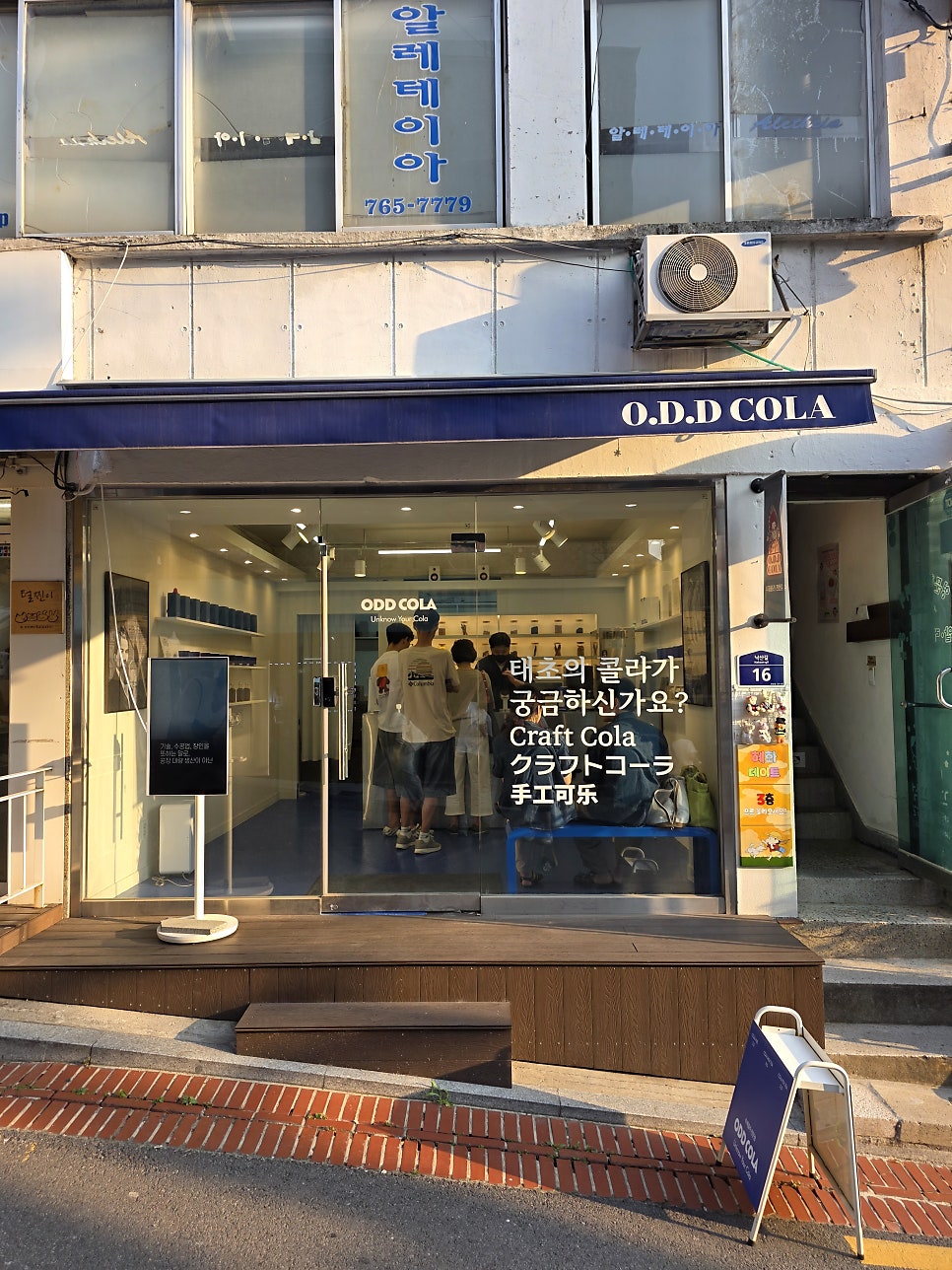
The first thing you see outside is a line of Korean asking if you want to know what the original cola tasted like, with Japanese and Chinese versions underneath. A simple front with only the message that matters. The original cola. I was curious, even though I cannot get through a day without zero cola.
Inside it is cream white with one deep navy accent, and brighter than I expected. A lit display case of raw ingredients faces you behind the counter and the floor is deep blue, so the whole room is two colors.
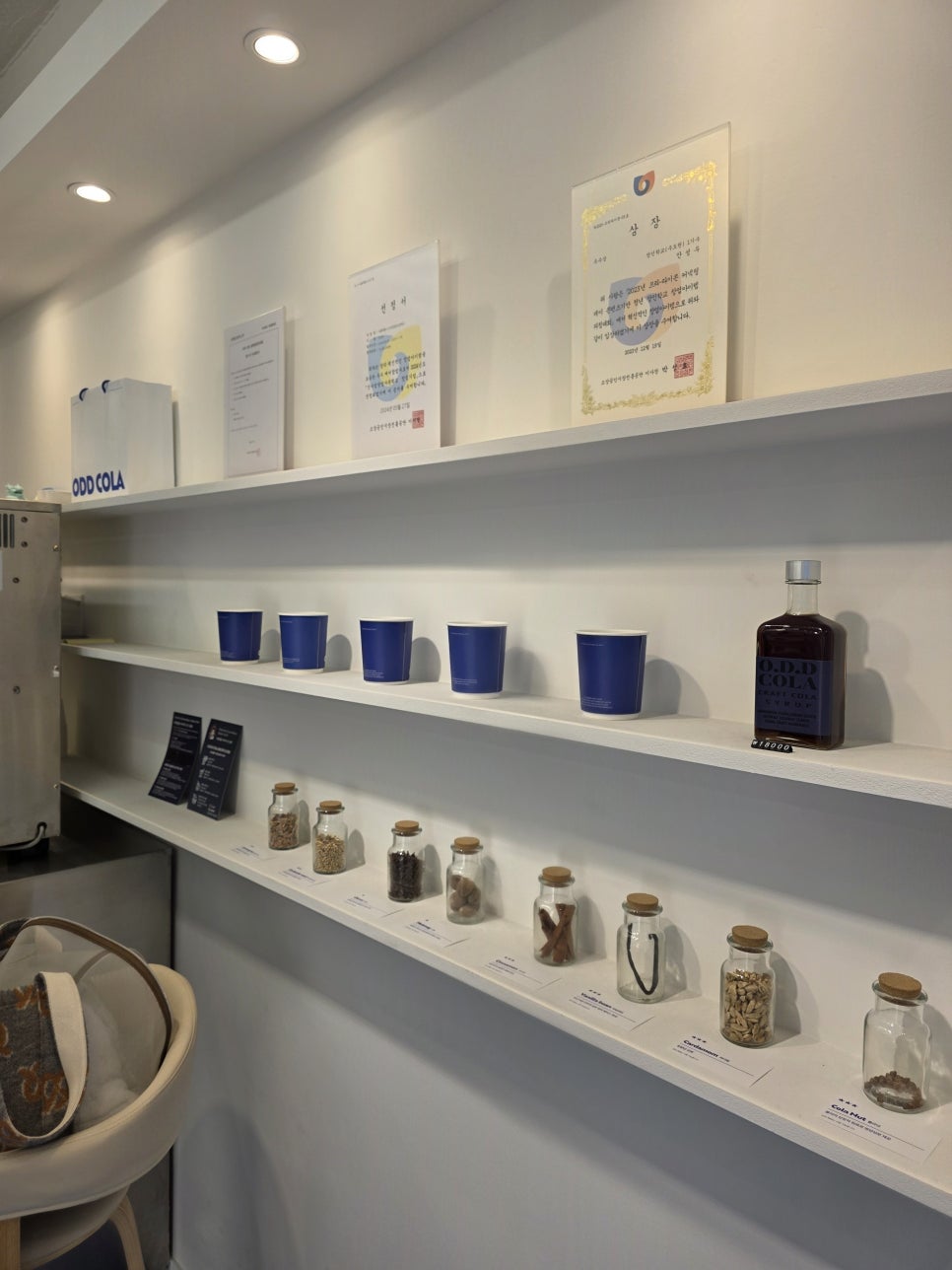
The ingredient case is the part I liked most. Cork-stoppered glass jars holding the raw spices, each label marked with three stars like a certification: cinnamon, nutmeg, clove, vanilla bean, and on another wall cardamom and cola nut. Those six go into the O.D.D syrup. I had never seen cardamom or cola nut up close. Cola nut is the fruit of a West African tree, the source of the caffeine and the bitterness in real cola. The mass-market colas replace it with flavoring and caramel; craft cola uses the actual thing, and that is where the layers come from.
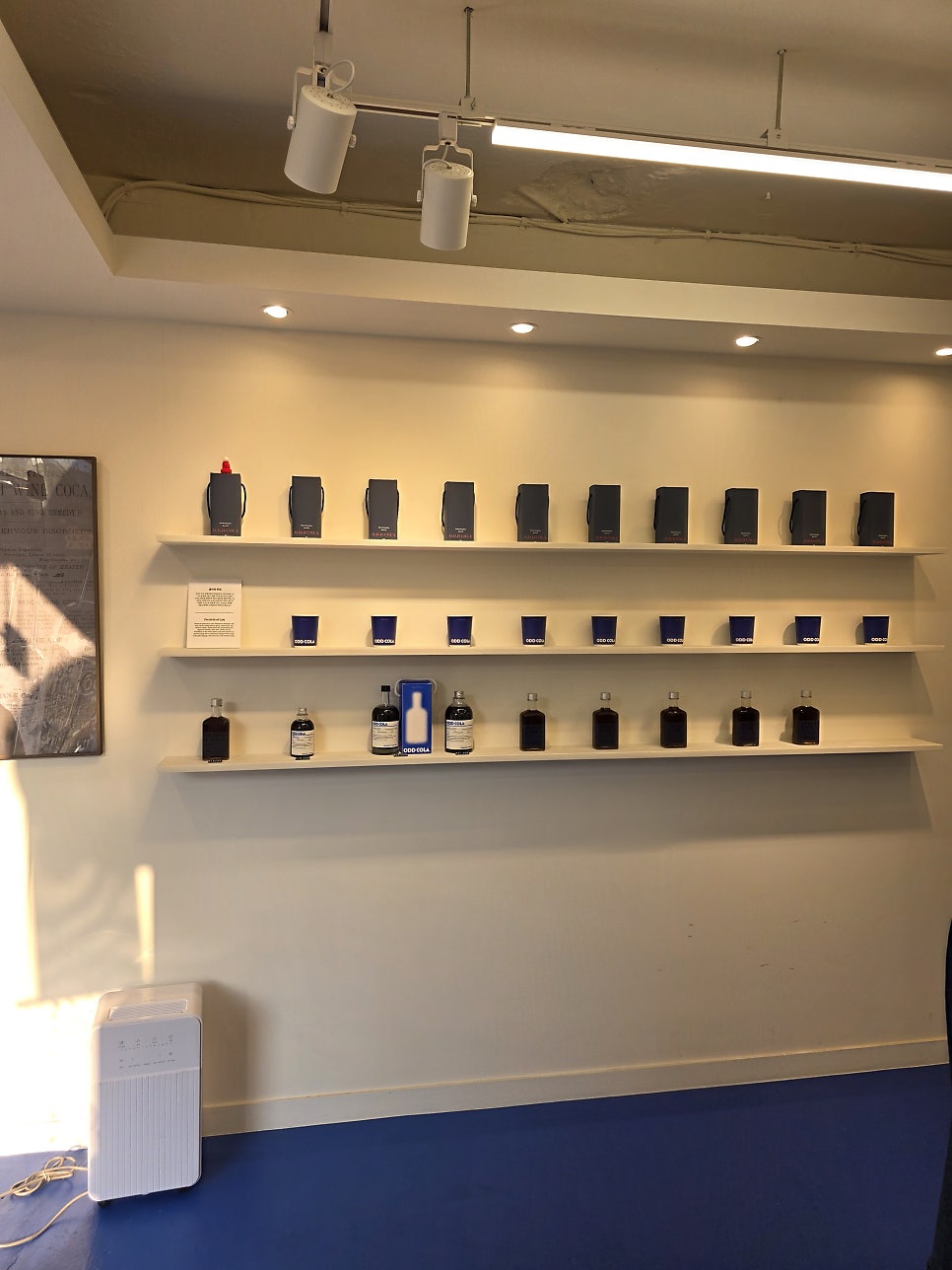
On one wall hangs a framed nineteenth-century advertisement for Merck & Co.’s Beef Wine Coca, from the era before cola was a soft drink, when coca leaf was medicine and was mixed with wine as a tonic. It is not decoration. It is a hint about what the shop thinks cola is.
A card on the wall explains the name: O for Origin, D for Depth, D for Discovery. Roots in spices and herbs, depth from real ingredients, discovery through new combinations. The front reads Drink the Extraordinary, Drink O.D.D. Having read the very first post, I could see how much thinking sat behind those three words. It was good to finally be standing in front of them.
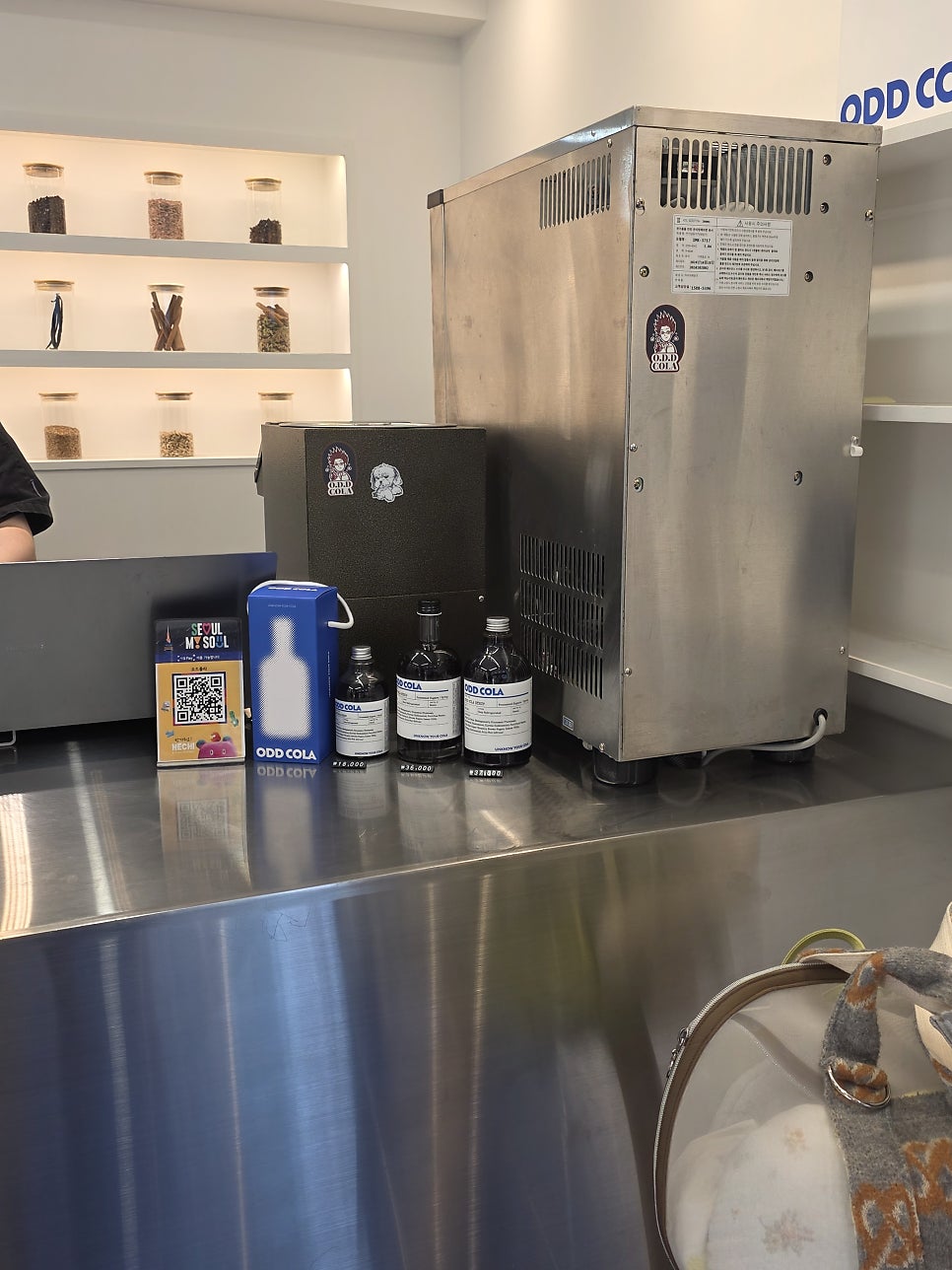
On the counter is a stainless carbonation machine and three bottles of brown syrup, poured into the cup and topped with soda, the same way the craft cola shops in Shimokitazawa and Harajuku do it. There were Tokyo craft cola magazines on the shelf, which told me where the owner is looking.
Sujeonggwa, chai, cola
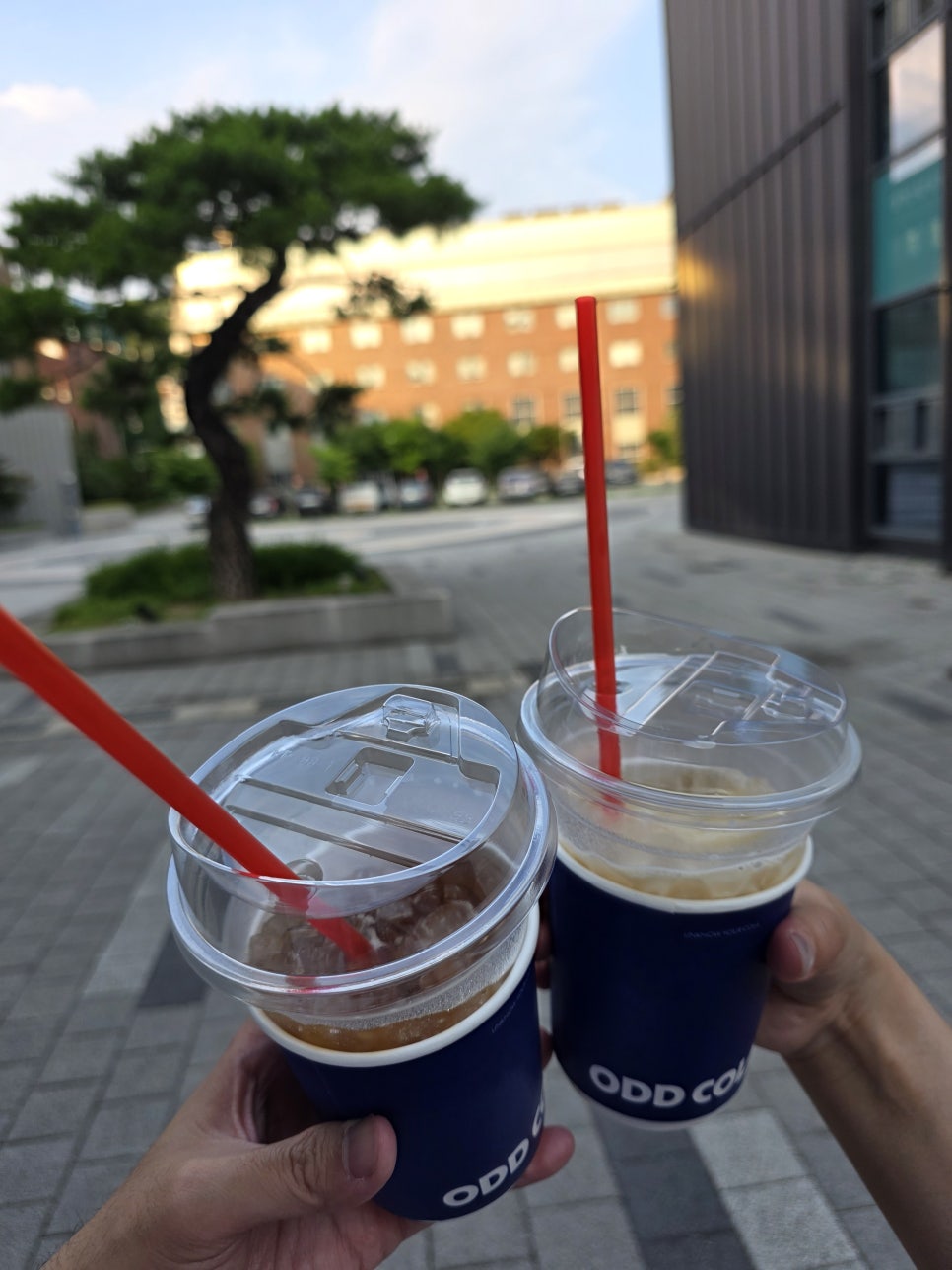
We ordered the cola ade and the milk cola, both in blue O.D.D paper cups, ice to the top and the brown syrup sitting in a layer. The cup alone photographs well.
The ade starts with the familiar cola sweetness, and then cardamom and nutmeg come in behind it, and that is where it leaves ordinary cola behind. To me it overlapped with sujeonggwa, the Korean cinnamon punch: the same cool spiced finish, but the aroma is different, because sujeonggwa has no cardamom or cola nut and this one pushes further toward Western spice. I spent the whole cup tracing where the two meet and where they part.
For the milk cola, the owner warned us as he made it that milk brings the spices forward and it would taste like Indian masala chai. He was right. Cinnamon and cardamom bloom over the milk and it is chai with a cola note on top. My girlfriend preferred it. I preferred the ade, because you taste the thing itself.
A shop this considered in an old alley under Naksan Park reminded me a little of early Seongsu, if that is not too much. Unlike Seongsu, though, the buildings in Daehak-ro were full; hardly any vacancy signs. Writing this, I wondered whether live theater will matter more in an age of AI, or whether rising fees for actors will thin the crowds. For now I lean toward the second, and I hope I am wrong.
Around half past six on a weekend the shop was not crowded. With so few seats it turns over quickly, and almost everyone walks up toward the park with the cup, as we did. After dinner, a slow walk with something cold in hand fits this exactly, and it links straight into the night walk along the Naksan fortress wall.
I’d recommend it to couples building an evening around dinner in Daehak-ro and a walk up to Naksan Park, to anyone on the fortress wall or Ihwa mural village route who wants a drink to carry, to the curious about craft cola, to people who loved the craft cola shops in Tokyo and were waiting for Seoul to get one, and to anyone who, like me, followed the story online and never made it here. If you want to sit and talk for an hour, this is not that place; plan it as the walk after dinner. Next time I am trying the cola iced tea with the Earl Grey syrup, which the owner says finishes very differently. The ade will still be my favorite.
My rating: 4.5/5. I would also like to bring a friend from abroad here, because the story, from cola as a spice medicine to a milk version that tastes like chai to an ade that tastes like sujeonggwa, is the kind of thing that turns into a conversation.