Geumjane, Seoul Station: the last charcoal beef house in Yangdong (closed)
Korean original on Naver blog ↗Korean version, 한국어로 읽기 ↗
Update: Geumjane has closed. The Yangdong block it stood on has gone into redevelopment, and the restaurant is no longer operating. I am leaving this up as a record of what was there.
There is an odd little district beside Seoul Station called Yangdong. Cross one more road from the Yonsei building and you were in a cluster of old restaurants, once known for charcoal-grilled beef. By the time I went, most of the shops had already closed ahead of the redevelopment. Geumjane was, my friend said, the last one still lighting its braziers.
City Hall and Gwanghwamun are too far and too expensive for a casual beef dinner. If you wanted good hanwoo over real charcoal at a sane price, this was the place a friend of mine went for every work dinner, and one Friday he took me.
What it was like
| Item | Notes |
|---|---|
| Prices we saw | Hanwoo sirloin 150g ₩45,000, 100g ₩30,000. Kimchi stew ₩15,000, noodles or doenjang stew ₩4,000. Lunch: beef and radish soup, bibimbap or tuna rice bowl, ₩10,000 each |
| Getting there | Eight to ten minutes on foot from Seoul Station, five from Hoehyeon station exit 5, in the alleys off Namdaemun market |
| Korean name | 금자네생등심 |
The alley
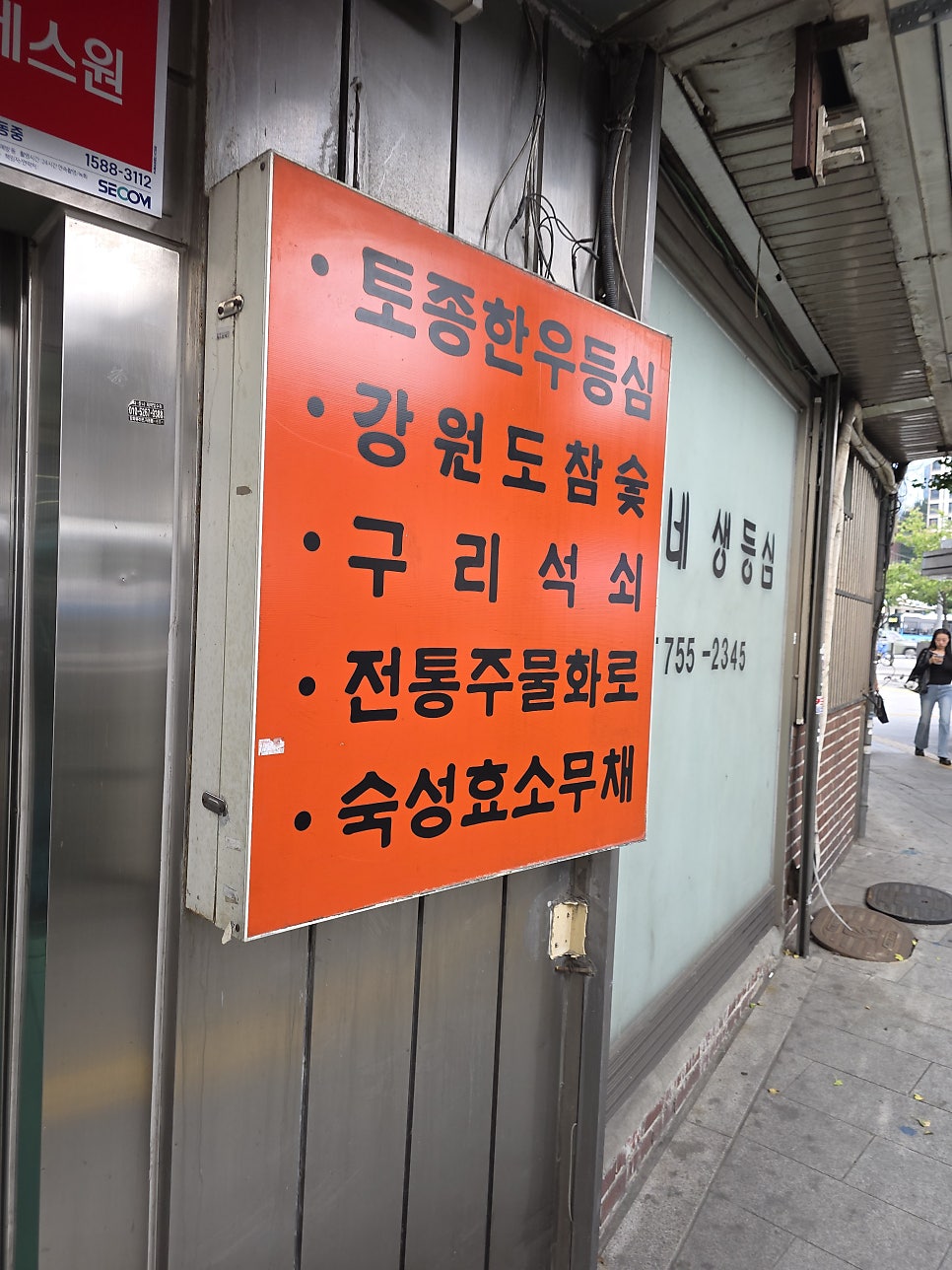
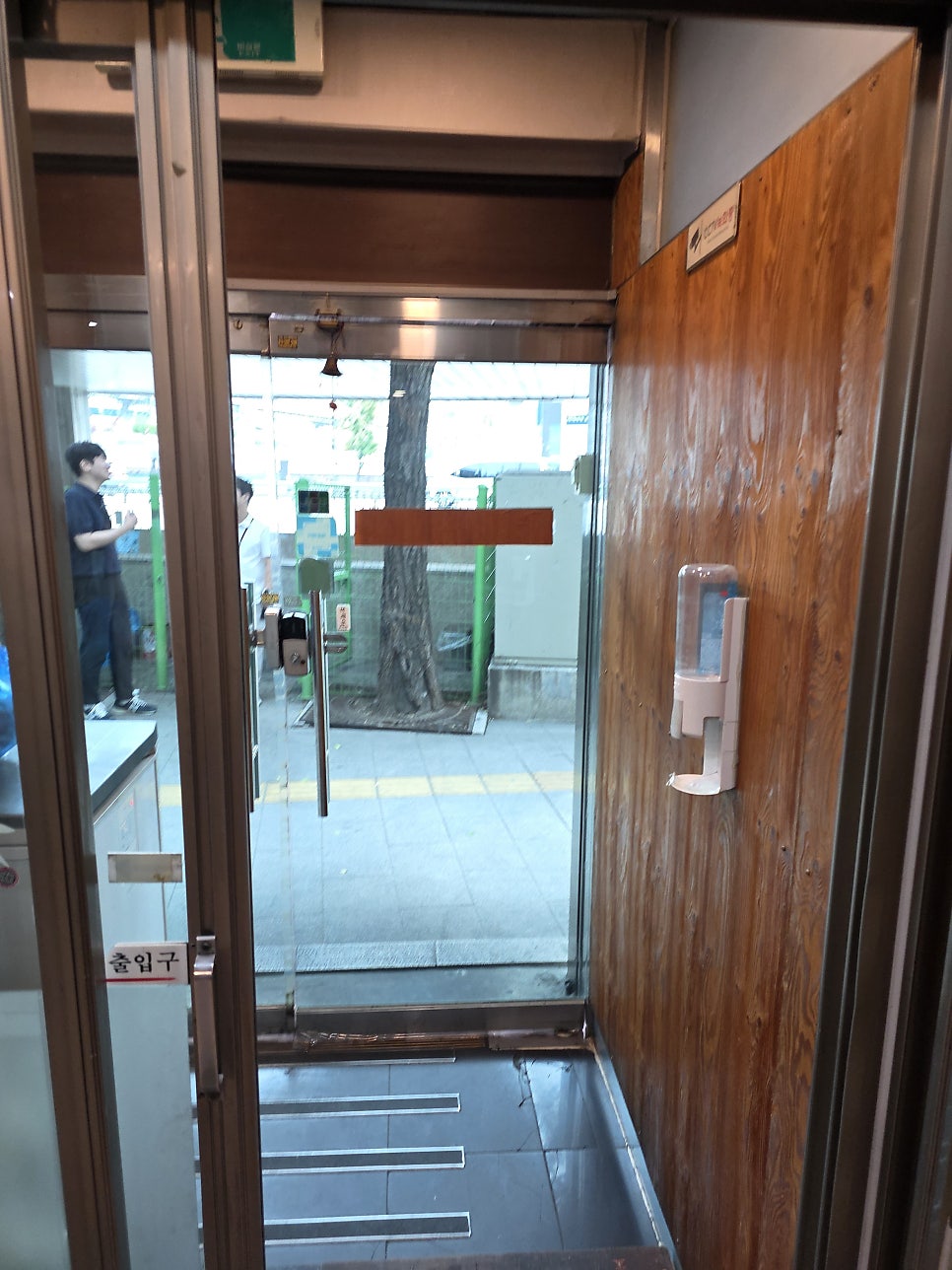
Walking from behind Seoul Station toward Hoehyeon, you passed shuttered shopfronts one after another. An old salon sign, a peeling shop board, and right behind them the glass office towers. The contrast was strange and a little sad. My friend said there had been several beef houses on this stretch until recently. Now it was only this one, still burning Gangwon charcoal in an alley the city had already decided to erase.
The sign was a joy: white board, the name in big vertical brush script, and under it an orange panel listing everything they sold. Korean hanwoo sirloin. Gangwon charcoal. Traditional cast-iron brazier. Among all the minimalist signage in Seoul now, a sign that simply says what it has looked honest.
Inside
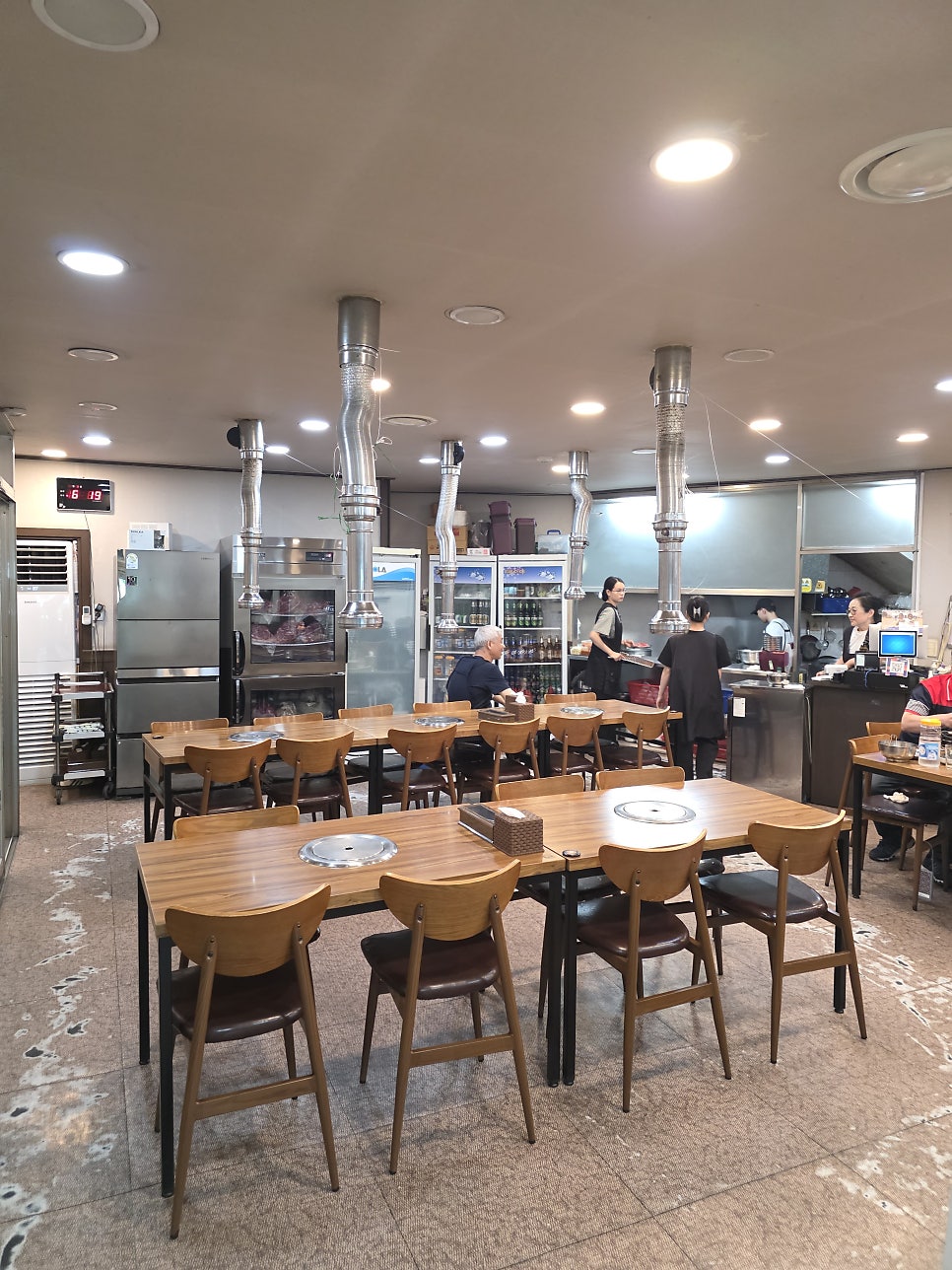
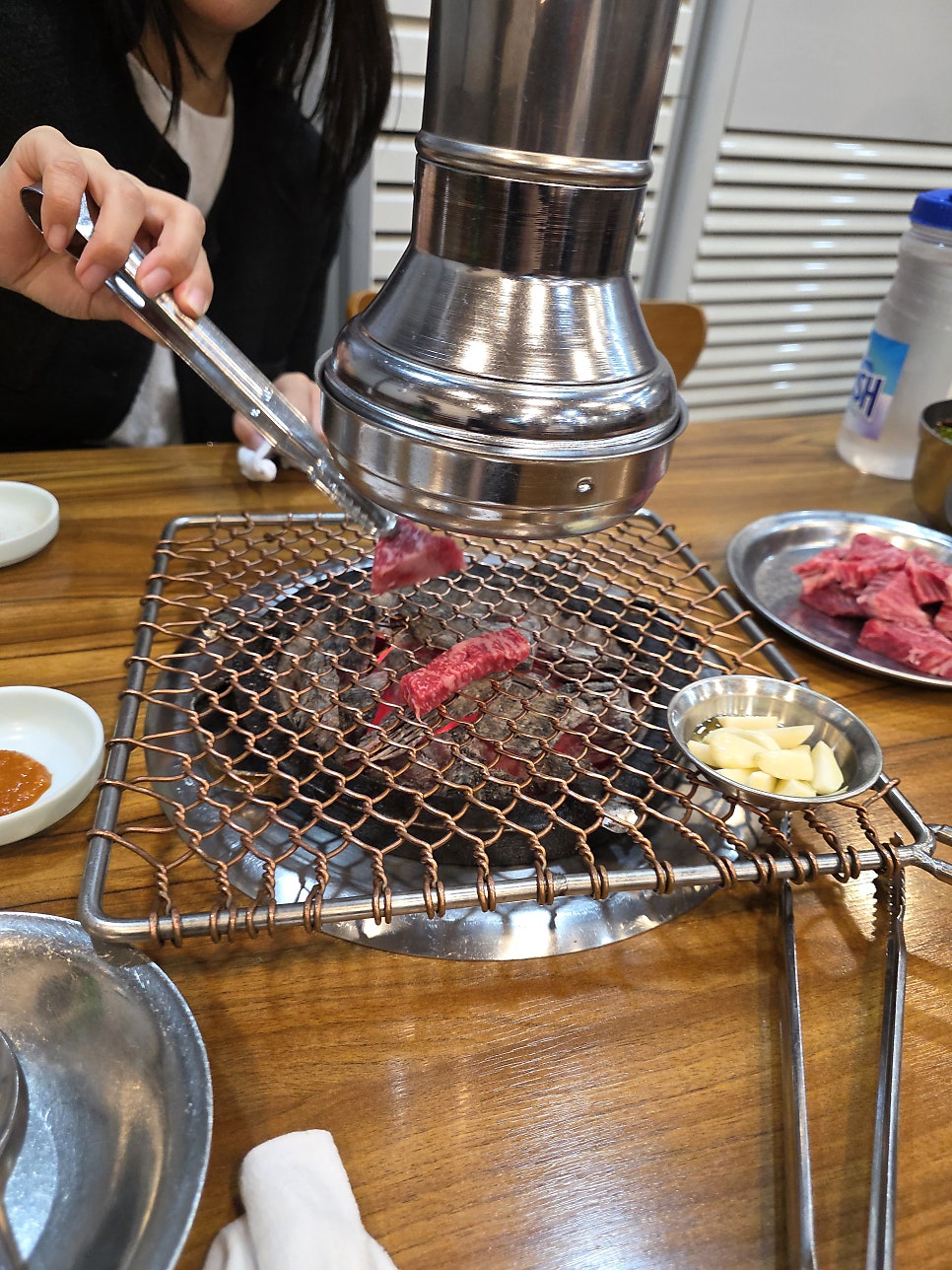
The hall was bigger than expected, eight to ten round wooden tables with a silver exhaust hood hanging over each one. An old restaurant in every way, but clean: polished floor, tables without stains, soft yellow wall lights. Far better kept than the beef house next door I had eaten at before, which had closed first.
At the back was a section behind glass partitions. A company group of five or six was having a Friday dinner there while we were in, and although you could hear them faintly, our table stayed calm. That was why my friend liked it for work dinners: the group could be loud in the room, and two people could talk quietly in the hall.
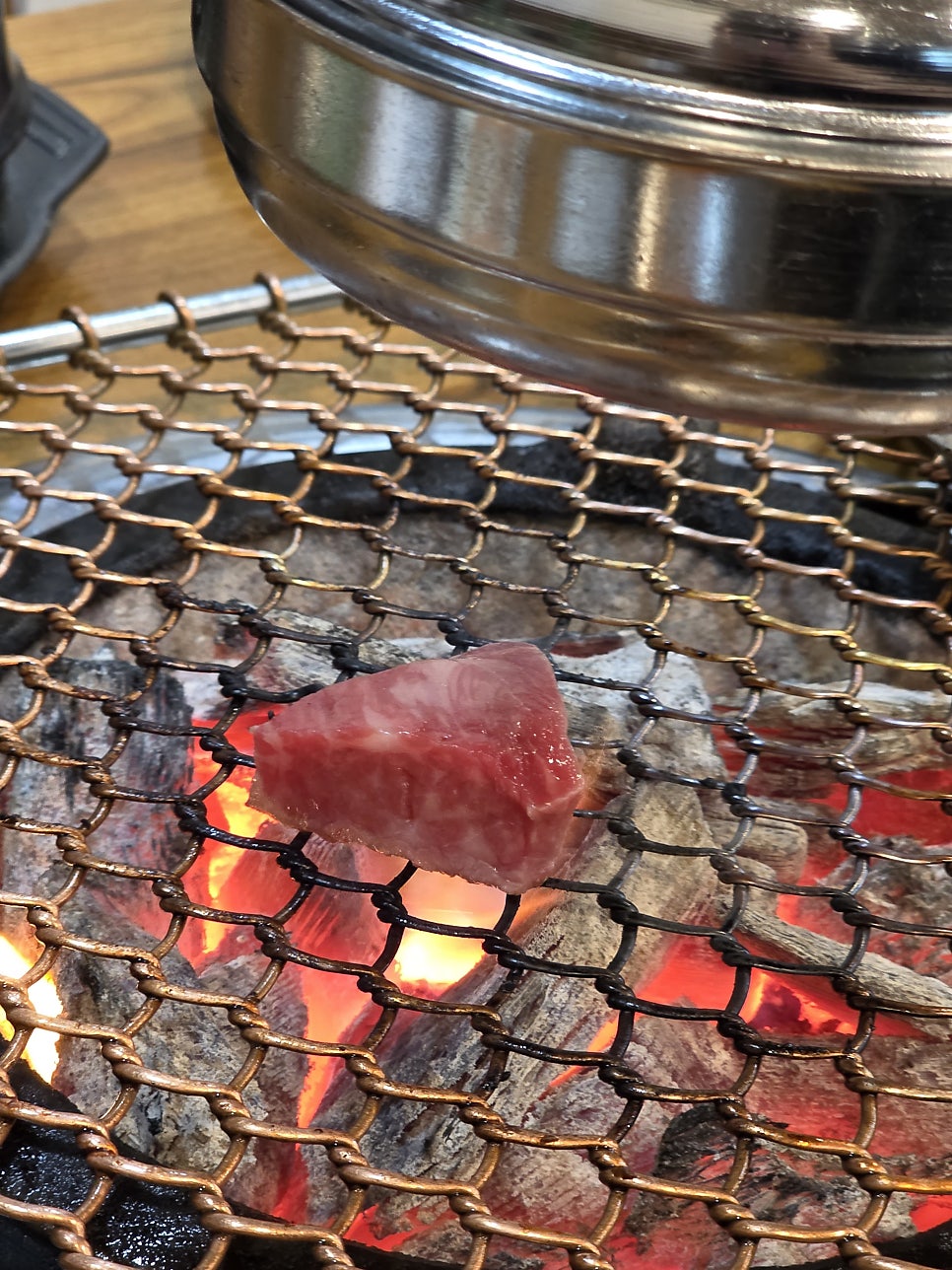
They set the brazier first: a silver frame with a copper mesh grill and red charcoal glowing underneath. I had never seen one like it. The Gangwon charcoal on the sign was not decoration. It felt nothing like a Japanese yakiniku grill, and I mean that as praise.
The ventilation surprised me. Charcoal beef, and almost no smoke. Each hood pulled straight up, and my clothes came out of the evening without much smell. If that is what keeps you away from Korean barbecue, this place had solved it. Two standing air conditioners on the wall kept the room comfortable.
It was Friday night, so a bottle of Terra beer arrived while the meat came up to temperature.
The meat
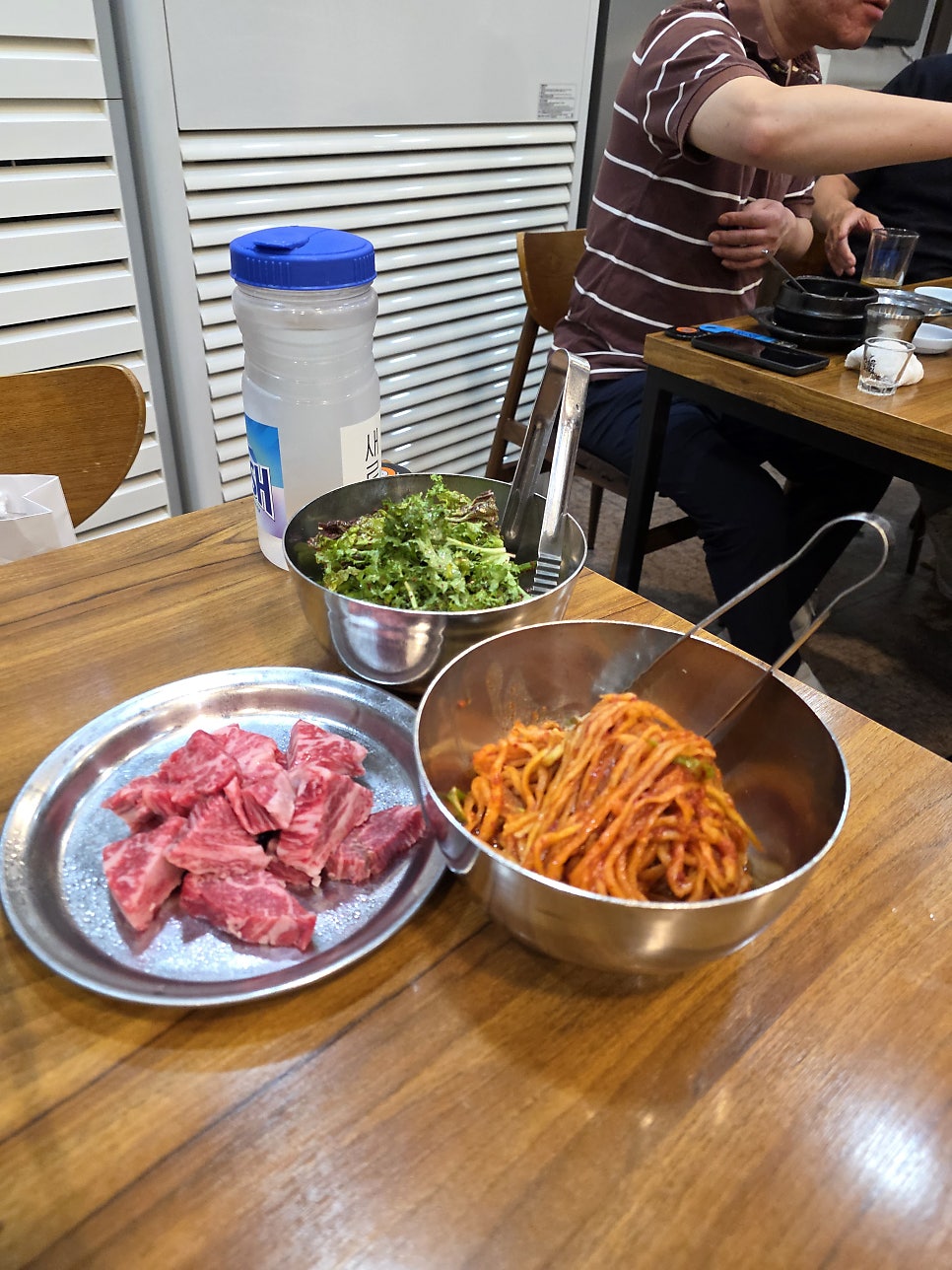
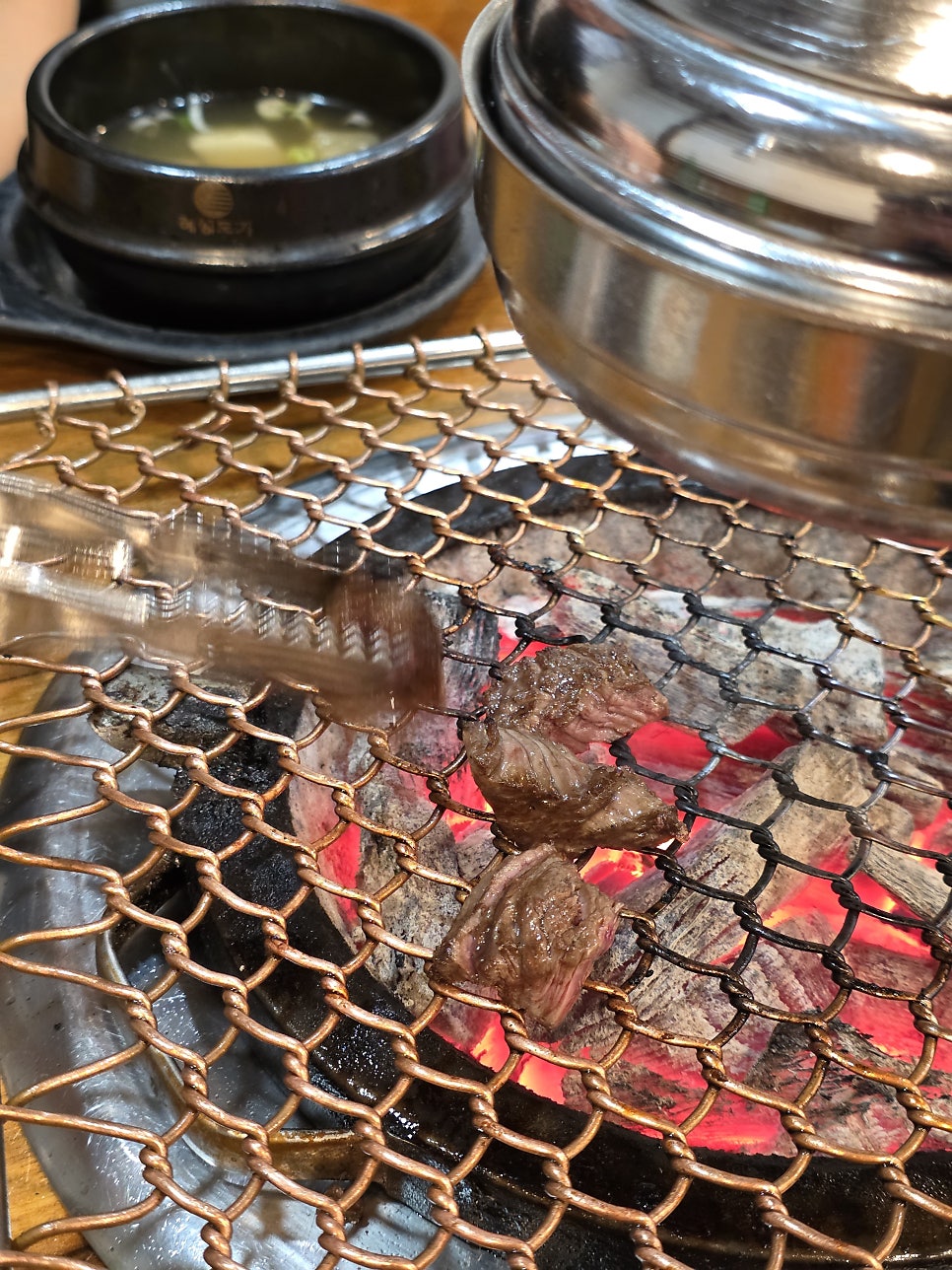
The evening menu was one thing: beef. We ordered three portions of sirloin for the two of us and it was plenty. It came in clean cubes, with a bowl of red seasoned radish salad and a bowl of green fresh kimchi on the side, which was the house signature setting. The radish salad on its own, over rice, would have been a meal.
The first cube on the charcoal hissed loudly. I ate the first one plain: mild at first, then the beef flavor rising as I chewed. The second I dipped in the pepper seasoning, which was stronger than the salt and brought the meat forward rather than covering it. The third went into the scallion salad, sweet and spicy against the sirloin, and that was the combination. The charcoal cooks fast, so two or three pieces at a time, straight off.
Halfway through, a stone bowl of steamed egg arrived as a gift, puffed up over the rim like a souffle. Fewer places do the erupting version any more. It made us laugh.
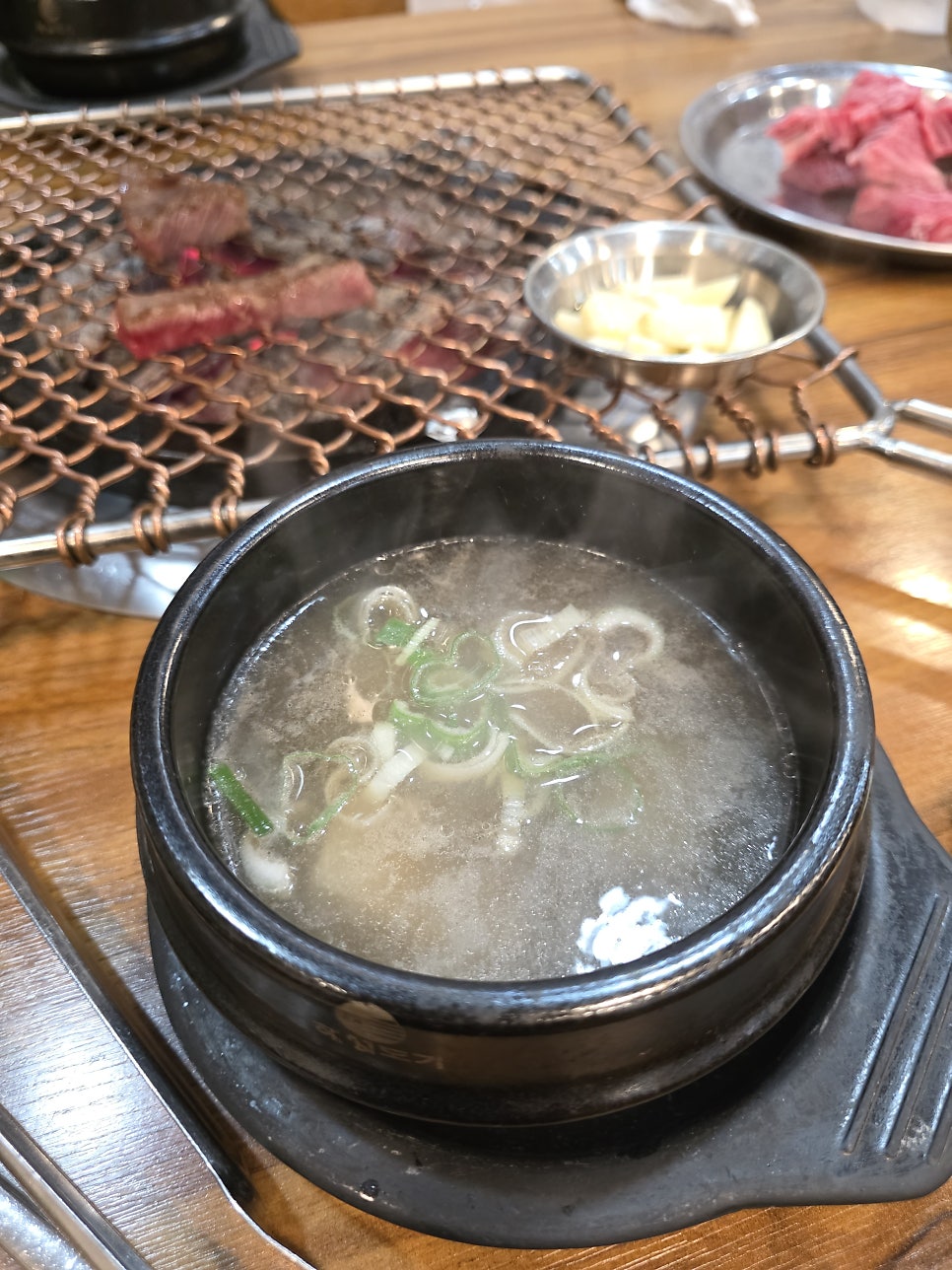
Toward the end we added the beef and radish soup. My friend came here for this alone at lunchtime. A pale broth with sliced radish and green onion, deep without being tiring. One ladle and the week was over. The seasoning on the table was just one salt. No wasabi, no flaky sea salt. It did not need them.
Why it mattered
Three things: real charcoal at a reasonable price, an old restaurant where your clothes did not smell afterwards, and a kitchen where everything, not only the beef, was good. The faint noise from the company dinner next door was not a flaw. It was the sound of a Seoul Station Friday night, the last version of it in that alley.
I had planned to come back for lunch, for the soup and a beef bibimbap, and to bring a friend from abroad to show them what an old Korean beef house looks like, if it was still there. It is not. My rating was 5/5, and it stays that way.