Seoulmong, Apgujeong: sake pairing in a tiny izakaya
Korean original on Naver blog ↗Korean version, 한국어로 읽기 ↗
When you want a glass of sake in Apgujeong, where do you go? There are big izakayas that are famous on Instagram and good wine bars around Dosan Park, but places where the sake list and the food are chosen to work together are rarer than you would think. Sake specialists can be expensive or vague about food. Places with great food often have a thin sake shelf.
I first noticed Seoulmong on a walk after lunch. It does not open for lunch, so I assumed it had closed down. When I finally ate there, I became a regular in one evening.
This time it was a dinner with former colleagues who had all moved on to different companies. My office is nearby so I walked; they came by subway to Apgujeong station. We wanted somewhere quiet enough to catch up and share a bottle, and this was the obvious answer.
Before you go
| Item | Notes |
|---|---|
| Booking | Book on Catchtable. Walk-ins are hard, especially Thursday and Friday evenings. The room is small, so groups over four do not fit |
| How much | Sake is listed by the 720ml bottle. For two or three people, one bottle and three or four dishes is about right. Corkage is available for a fee if you bring your own |
| Getting there | Apgujeong station exit 3, about five minutes on foot toward Dosan Park. No parking; use the public lot on Dosan-daero 45-gil or come by subway |
| Korean name | 서울몽 |
One red lantern
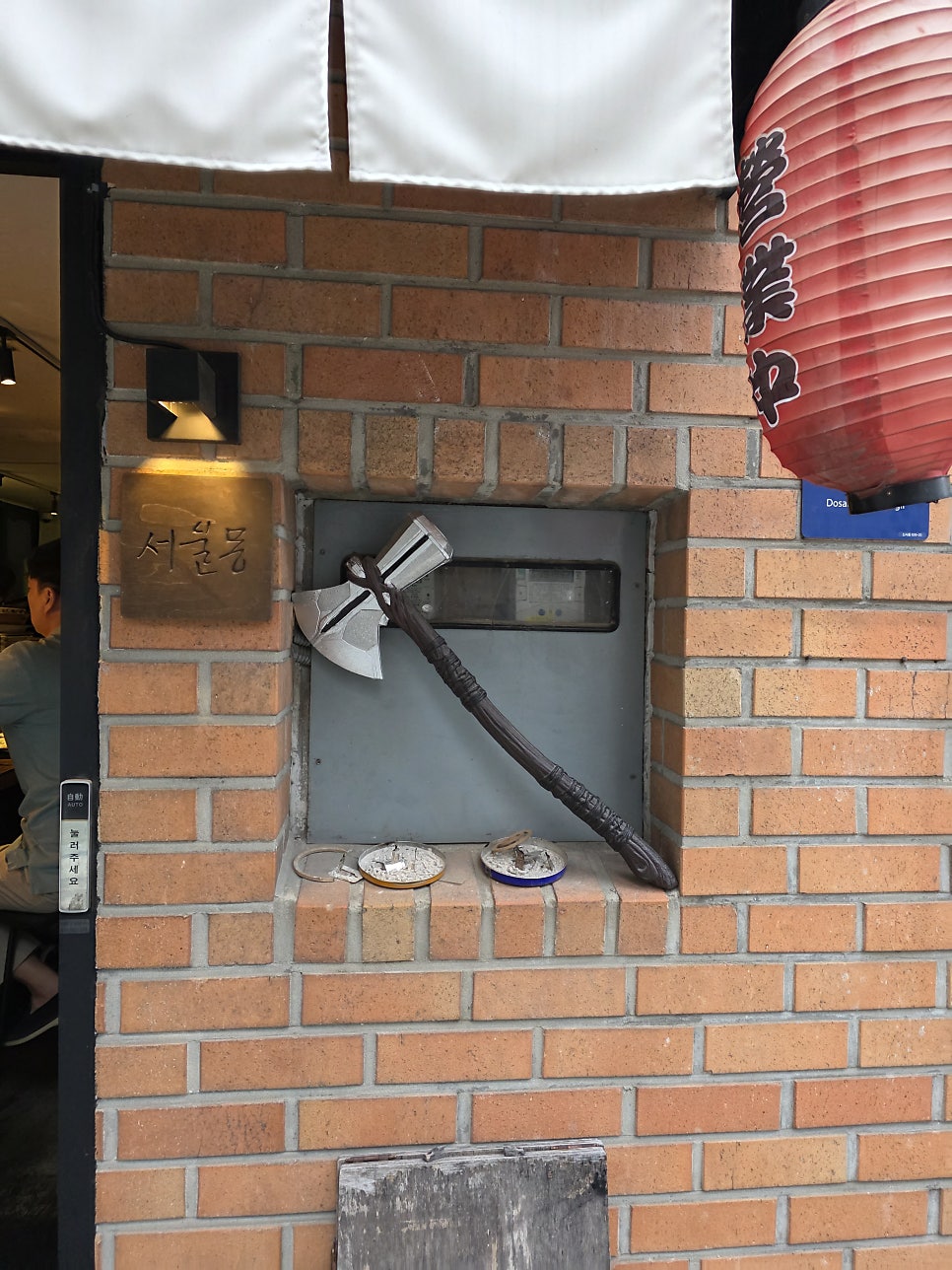
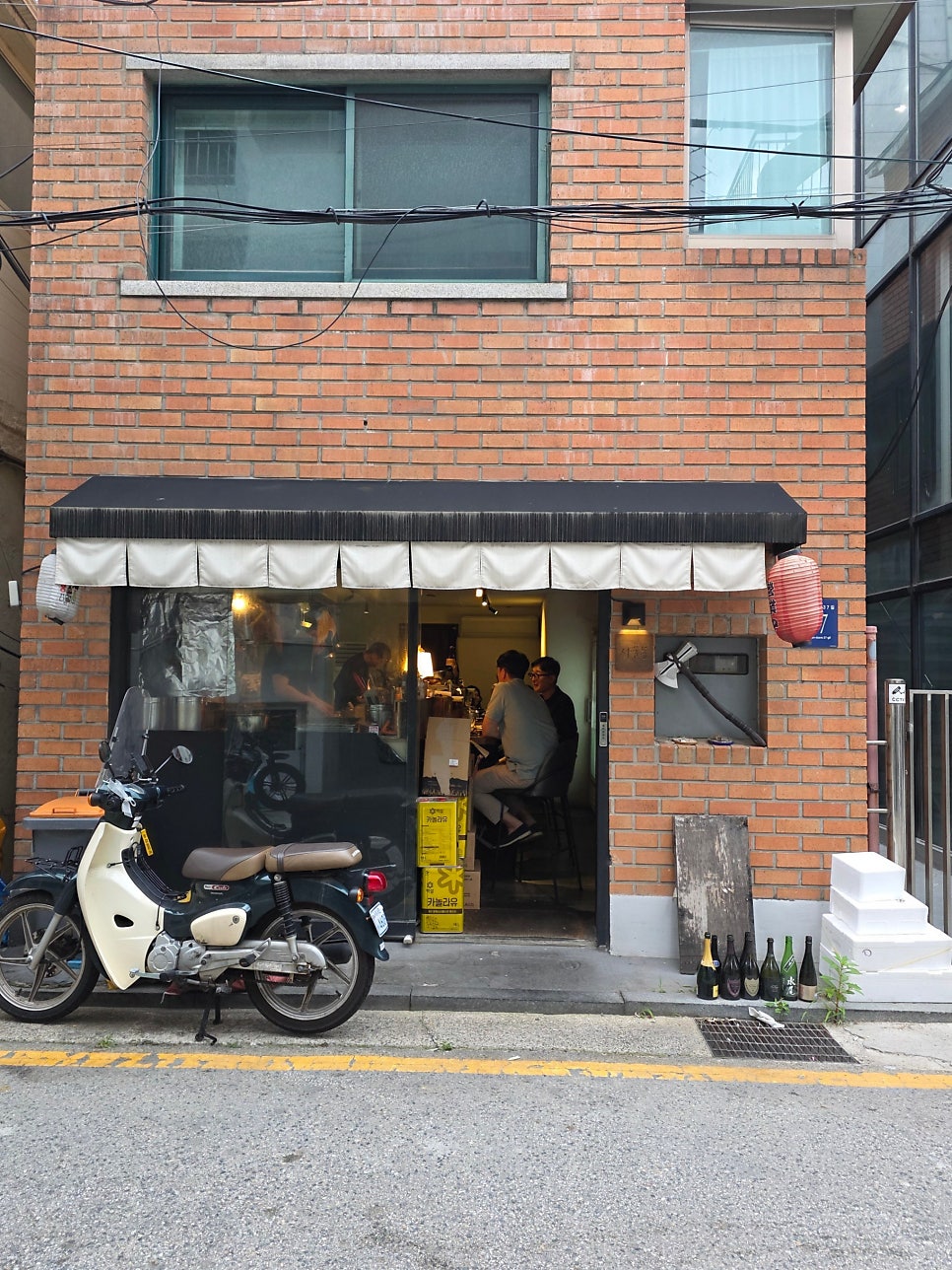
The address says Sinsa-dong, but on foot it is the side street that runs from exit 3 toward Dosan Park. One block in from the main road the noise drops. Behind the strip of plastic surgery clinics the street turns into a mix of low houses and small shops, and finding a place like this back here is very much the Apgujeong I like.
The front is brick and looks like a small cafe. Through the glass you can see people at a counter, which is the first hint. Above the door hangs a big red lantern with 서울몽 in black brush strokes, and beside it a brass lamp shaped like an axe. That is the whole sign. No lightbox, no lettering. You come here because someone told you.
Inside it is tight: a few counter seats and one table. Two chefs cook and serve everything from behind the counter, which is the kind of size where they remember faces. Concrete ceiling, white walls, dark wood counter, dark green stools. Industrial and back-alley Tokyo at the same time, and the two moods get along.
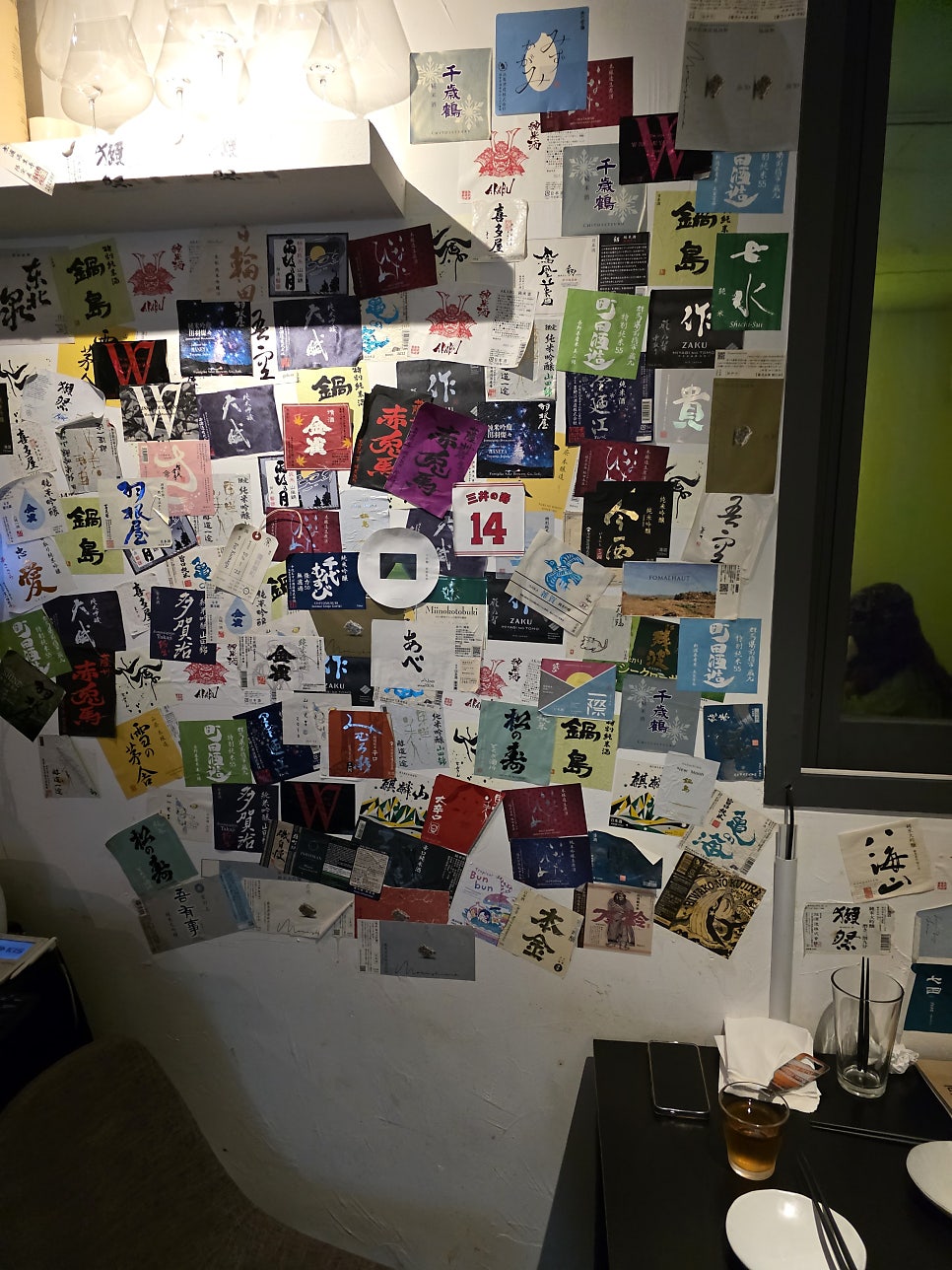
The wall behind the counter is the identity of the place. It is covered in labels from bottles they have finished, well over a hundred of them in black brush script, red, blue and yellow. Nabeshima, Hakurakusei and Dassai keep reappearing. I have seen sake walls before; this one reads like a diary.
A handwritten list and a sticky-note special
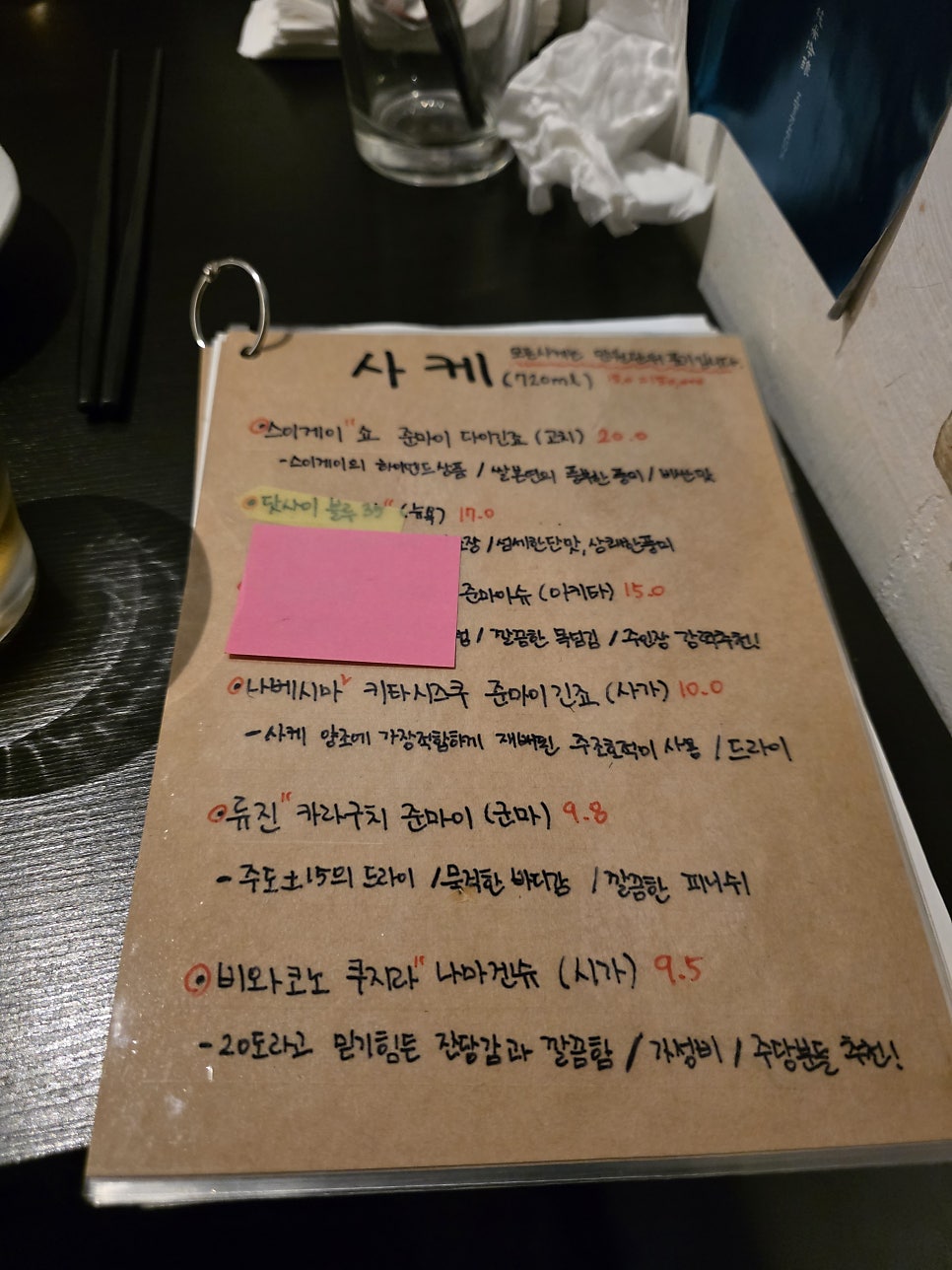
The menu is handwritten on brown kraft paper, sake in black fountain pen with prices in red. Today’s sake and shochu are on a yellow sticky note. The food menu is grouped into sashimi, simmered dishes, fried dishes and charcoal grill, with the day’s specials on pink and mint notes: snow crab in tosa jelly and striped jack sashimi that night. The specials change with what comes in, and I have not had a bad plate here.
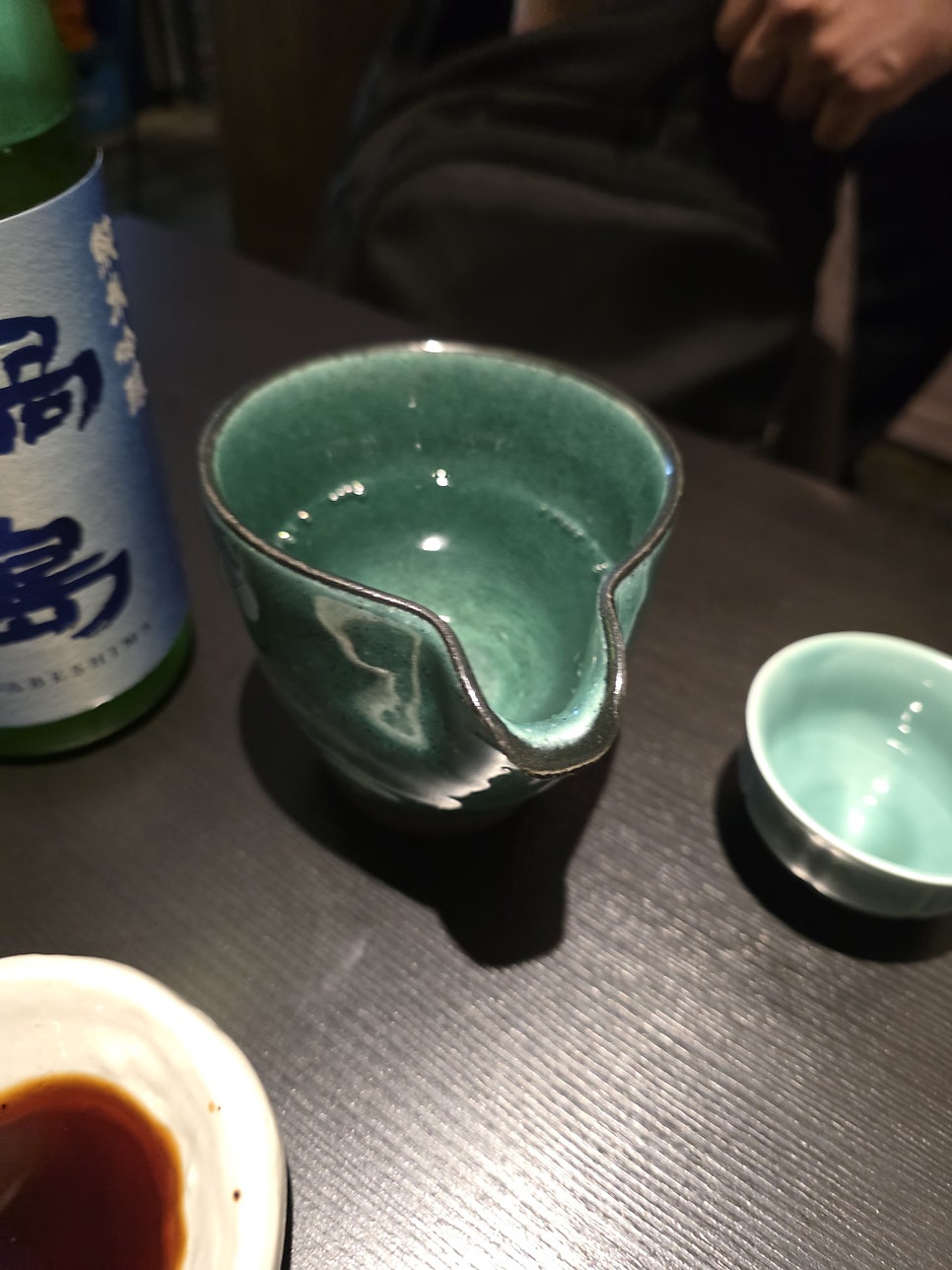
For the first bottle the chef picked a Nabeshima Kitashizuku Junmai Ginjo that was drinking well that day. Green bottle, blue label, 鍋島 in brush script. It is a premium line from Fukuchiyo Brewery in Saga that you do not often see in Seoul izakayas, and it came in a teal ceramic tokkuri. Cleaner than I expected from a junmai ginjo, with a smooth finish and a little acidity that makes it a good partner for food. The first clink of glasses raised the temperature of the table by a degree.
Tilefish, monkfish, and a gift
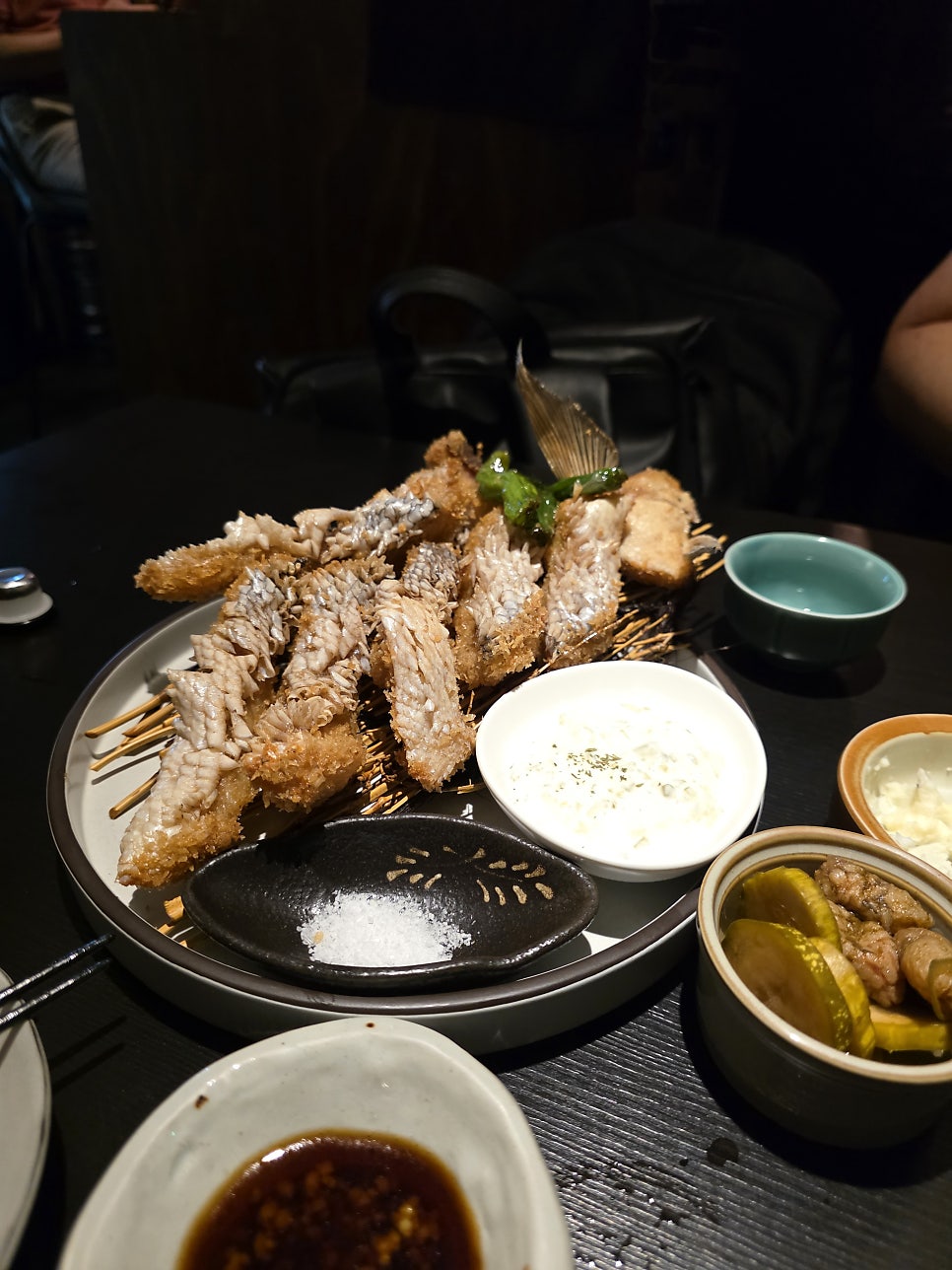
The first dish was fried tilefish on skewers, six of them with the silver skin left on, served with grated radish and a dish of salt. A touch of salt, then the fish: crisp outside, the flesh still springy because the whole fish is fried on the skewer and does not fall apart. A sip of Nabeshima cleared the oil exactly.
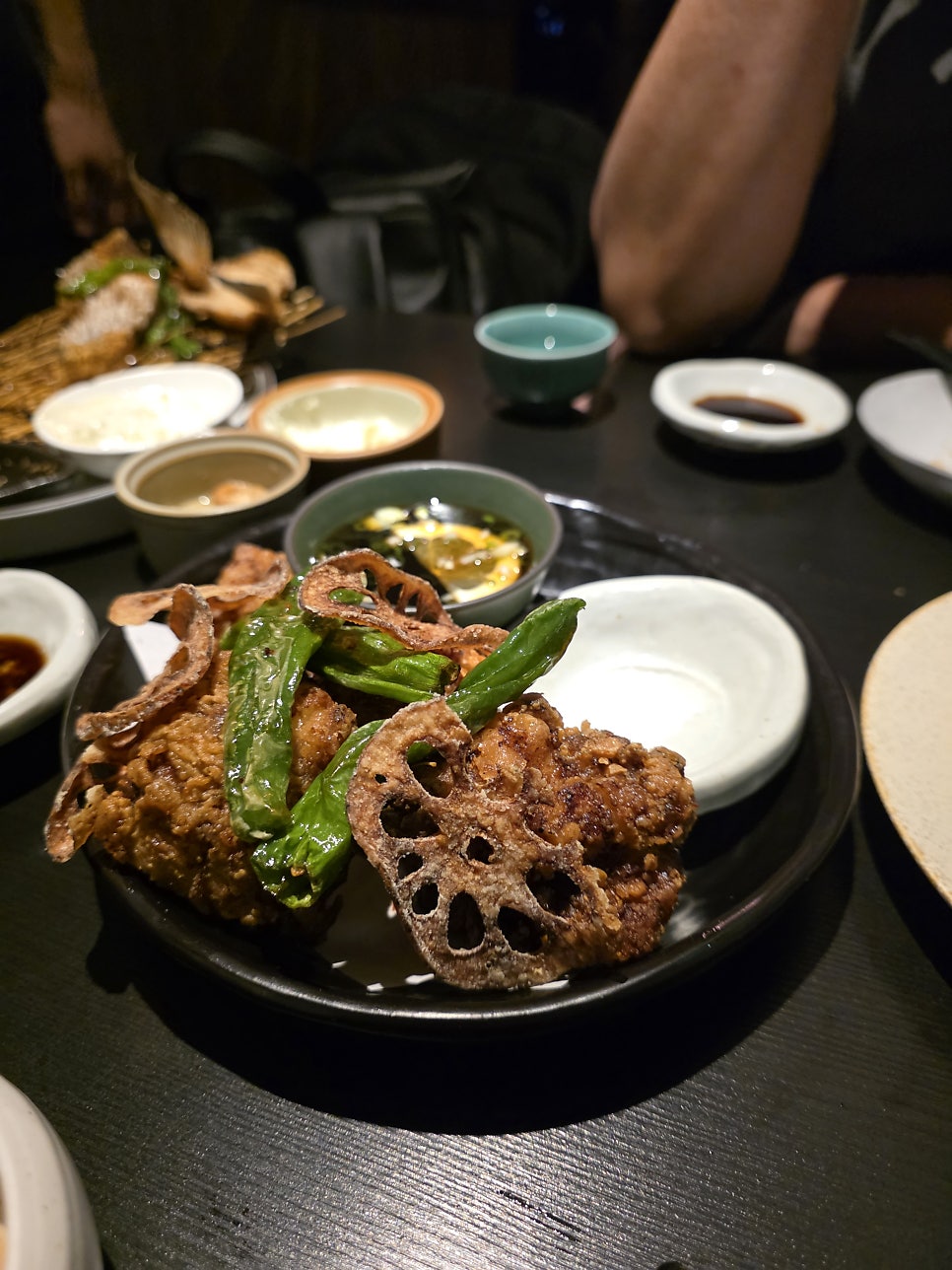
The highlight was the monkfish karaage. Here it comes in a black bowl with fried lotus root slices and shishito peppers. The coating is crisp and the monkfish inside keeps its chewy bite, denser for being sealed in batter. Lotus root and peppers were as good as the fish. Then another sip of sake, the mouth resets, and you reach for the next piece. After this pairing the friends who had never cared about sake said they would look at it differently.
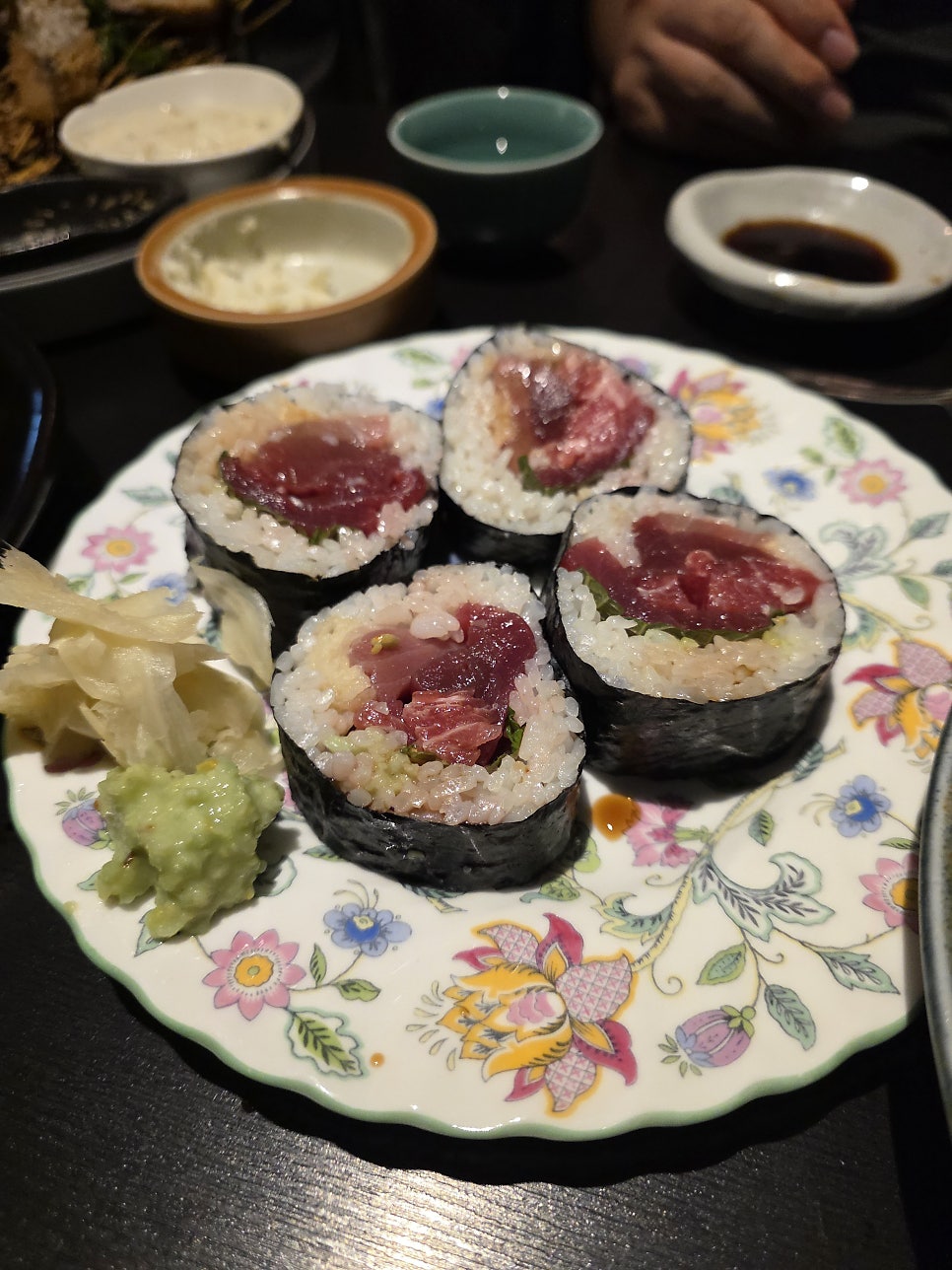
We ordered more than I can list, and at some point the chef handed us a tuna maki we had not ordered, made from several different cuts. I do not have a better description than: nothing here is not delicious.
By half past eight the room was full. A man drinking alone under the label wall, a couple in their thirties, two friends at the counter asking for one recommendation after another. The chefs shifted their tone for each of them, which is only possible in a room this small. It suits a slow dinner with people you have not seen in a while, or a late second stop. It does not suit a loud group.
I’d recommend it for a quiet dinner with old friends or colleagues, for a birthday or anniversary with two or three people, and for anyone who wants to sit at a counter and let the chef choose. Next time I’ll order the simmered mackerel with radish again; I skipped it this time only for fear of overordering, and ask for a Hakurakusei instead of the Nabeshima.
My rating: 5/5. The monkfish karaage alone is reason enough to go back.